
Monday, September 29, 2025
How the MEDC Helps You “Make It” in Michigan
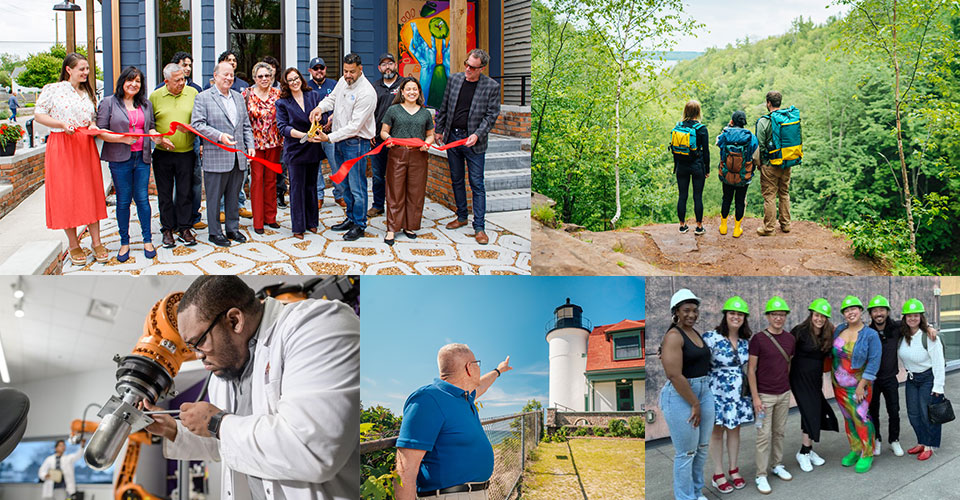
The Michigan Economic Development Corporation (MEDC) is building a future where everyone can “Make It” in Michigan.” Whether you’re an entrepreneur with a big idea, a professional looking to take your career to the next level, or someone who simply wants to live life on your own terms, the MEDC offers the tools and opportunities you need to make it happen.
While you don’t need to understand exactly how the MEDC works to benefit from its services, it can help to have some background on what makes it different from other state agencies and why it’s set up like the economic development entities in many other states and cities. These are some of the questions that are frequently asked about the MEDC, how it works, who’s in charge, and why it’s valuable:
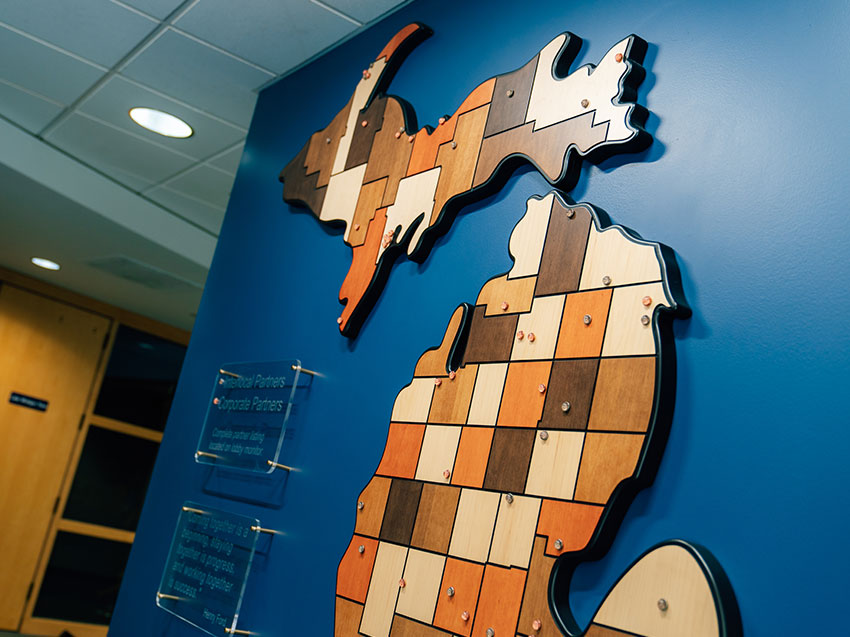
What exactly is the Michigan Economic Development Corporation (MEDC)?
The MEDC is a public-private partnership that serves as the state’s marketing arm and lead advocate for business development, equitable job growth, and community development with the focus on growing Michigan’s economy. Our mission is to achieve long-term economic prosperity for Michiganders through the Make It in Michigan economic development strategy by attracting and developing people, cultivating and revitalizing places, and competing for and winning projects of all sizes.
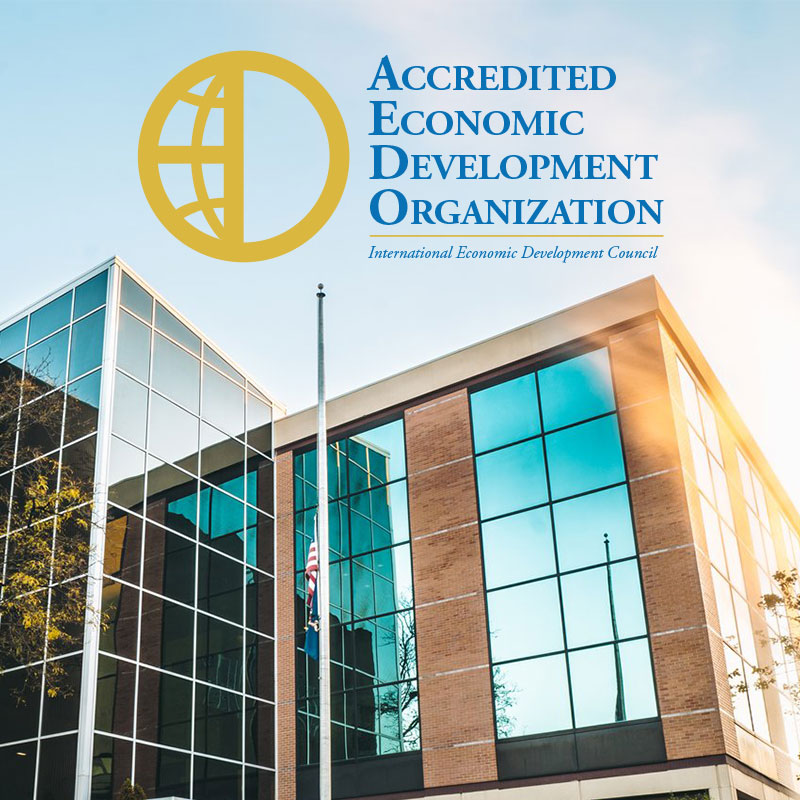 In 2025, the MEDC was recognized as an Accredited Economic Development Organization by the International Economic Development Council. It is one of only two statewide organizations in the nation to have received this prestigious designation. As an AEDO, the MEDC joins an elite group of economic development organizations that have demonstrated the highest level of accountability, transparency, and effectiveness.
Where did the MEDC come from?
The MEDC was established through an Interlocal Agreement between the Michigan Strategic Fund and more than 50 interlocal partners (including the Detroit EDC, Grand Rapids EDC and Oakland County EDC, for example) in 1999 under then-Governor John Engler, an agreement that was later amended in 2003 and 2018. Interlocal agreements allow public entities (like state and local governments) to partner with each other and with private entities. Economic development collaboratives (EDCs) are organizations formed under these agreements to promote economic growth in a region or city, often through business attraction, site or workforce development, etc. The MEDC works with interlocal partners and EDCs to keep state-level strategies aligned with local needs and priorities.
In August 2025, the MEDC’s strategy was recognized by economic development leaders across the state, who called for the renewal or extension of existing statewide programs in seven of their top ten priorities for Michigan’s continued growth and prosperity. These leaders agree that many of the state’s current efforts are working well and are worthy of continuing and consistent investment.
What is the Michigan Strategic Fund (MSF), then?
The Michigan Strategic Fund has broad authority to promote economic development and create jobs. Established by PA 270 of 1984, with additional responsibilities set by Executive Orders 2012-9 by then-Governor Rick Snyder, as well as 2019-13 by Governor Gretchen Whitmer, its 13-member board decides whether to support the investment of dollars into certain projects and initiatives as recommended by the MEDC. This can include grants and loans under the Michigan Business Development Program and Michigan Community Revitalization Program, for example.
Nine members of the MSF Board are appointed by the governor, subject to the advice and consent of the Senate; the other four are the leaders of the MEDC and the state departments of Labor and Economic Opportunity, Treasury, and Transportation (separately). One of the appointed members is nominated by the state Senate majority leader, and one is nominated by the Speaker of the state House of Representatives.
Since 1999, the MEDC has provided administrative services to the MSF. The fund allocates four percent of its annual appropriation to pay for the MEDC’s administrative services. Each month, MEDC staff bring forward recommendations for proposed projects and initiatives for consideration by the MSF Board.
So, MEDC, MSF… then what is the MEDF that’s involved in these investment missions?
The Michigan Economic Development Foundation (MEDF) is a 501(c)(3) nonprofit that supports economic development efforts on behalf of the state of Michigan, including those of the MEDC. The MEDF operates from corporate and nonprofit contributions, and those funds can be used to help support efforts such as investment missions, hosting foreign delegations and hospitality opportunities.
In other words, most of the costs of investment missions are covered by contributions from MEDF supporters – not by taxpayer dollars.
This strategic support plays a critical role as state officials make a case for Michigan’s pro-business environment and investment opportunities. The MEDF is one of many groups that share MEDC’s mission and vision to promote Michigan’s pro-business environment and investment opportunities, and publishes an annual report that details its activities.
Do other states or big cities in Michigan have a simpler approach?
Many states and large cities use a public-private partnership model like the MEDC’s structure, including Arizona, Florida, Indiana, Kansas, North Carolina, Ohio, Pennsylvania, Rhode Island, Virginia, Wisconsin, and Wyoming. Some also have independent economic development foundations. The Detroit Regional Partnership and The Right Place in Grand Rapids are also public-private partnerships, and have both been accredited by the International Economic Development Council.
How does the MEDC ensure transparency?
As Michigan’s lead economic development agency, the MEDC has a strong commitment to keep citizens informed about programs and incentives supported in part by their tax dollars, and makes a variety of reports and data freely available through its website, including an annual financial audit report for the MEDC and MSF and an annual report to the legislature.
Michigan is in the top ten states for economic development transparency, according to a 2022 evaluation by the nonprofit Good Jobs First, ranking seventh in the nation and ahead of California, Florida, Georgia, Minnesota, New York, Ohio, Tennessee, and Texas.
Who’s in charge of the MEDC?
Oversight and management of the MEDC is governed by an Executive Committee consisting of twenty (20) members, appointed by the Governor of the State of Michigan.
The Executive Committee also appoints the Chief Executive Officer, who is tasked with administering programs, funds, personnel, contracts, and all other administrative transactions of the MEDC, subject to oversight of the Executive Committee.
As a public body corporate, MEDC Executive Committee is subject to both the Michigan Freedom of Information Act (FOIA) and the Michigan Open Meetings Act (OMA). Per OMA, Executive Committee meetings are open to the public.
Separate from the Executive Committee, the Corporation Board is composed of approximately 57 interlocal members. The Corporation Board is charged with evaluating the performance of the MEDC pursuant to standards established by the Executive Committee and may review acts of the Executive Committee, as deemed necessary. Meetings of the Corporation Board are generally held annually and are subject to OMA.
Are the people at the MEDC state employees?
Some are state employees, while others are considered corporate employees, but in practice it doesn’t make much difference.
Functionally, corporate and state employees work side by side across teams to deliver on the MEDC’s Make It in Michigan strategy with little to no distinction for our customers and stakeholders.
What all does the MEDC do?
More than you might realize! It’s easiest to think about the MEDC’s efforts in three broad categories as part of the Make It in Michigan strategy: People, Places, and Projects.
People
- The Talent Solutions division and its Talent Action Team work directly with industry leaders and higher education institutions to strengthen our talent pipeline, attract new workers and upskill our workforce. For example, one woman was able to earn eight certifications and start a new skilled career in Grand Ledge thanks to support from the Talent Action Team.
- The Michigander Scholarship Program offers top tech and engineering students in Michigan an exclusive close-up of the EV, mobility, semiconductor, and aerospace/defense sectors, career guidance and job-seeking support, and networking opportunities with industry employers.
- You Can in Michigan is Michigan’s long-term talent attraction campaign meant to help retain and attract high-tech workers. As of September 2025, the campaign has generated over 60,000 Michigan Career Portal sign-ups and 4.6 million website visits to themichiganlife.org while bringing in multiple industry awards.
- Make MI Home invites recent grads, those moving from across the country, and others, to join this first-in-the-nation program and make Michigan home. The Michigan Growth Office is charged with growing the state’s population, including through a brand ambassador program, #MIMOMENT, to celebrate the people, places, and passions that make our state shine.
Places
- Through the Revitalization and Placemaking program, Transformational Brownfield Plan program, Michigan Main Street, Michigan Community Revitalization Program, Public Spaces Community Places and many others, the MEDC supports communities throughout the state with renovating blighted properties, adding critical housing, awarding grants for beautification projects and making improvements that impact the lives of Michiganders who call these places home.
- Pure Michigan celebrates 20 years in 2026, with a robust, award-winning tourism promotion effort that’s nationally recognized.
-
Michigan’s vibrant arts and cultural scene are important to the state’s communities, excellent quality-of-life and thriving economy. The Michigan Arts and Culture Council is the state’s key conduit for arts and cultural information, grant funding and more.
- The State Historic Preservation Office helps property owners, developers, and local and state agencies identify and seize opportunities to celebrate and rehabilitate historic places that define local communities and make our state uniquely Michigan.
Projects
- The state’s Pure Opportunity campaign makes the case for businesses to come to Michigan and “Live the good life. For less.” Affordable housing, affordable healthcare, lower taxes, and work-life balance mean that “the premium quality-of-life package comes standard.”
- MEDC field staff live and work in every corner of the state, coordinating directly with businesses and communities on expansion, attraction and retention opportunities.
- Dedicated offices work in specific focus industries: the Office of Future Mobility and Electrification (OFME) builds on Michigan’s robust mobility legacy and leadership to develop people-centric and community-oriented solutions, the Office of Defense and Aerospace Innovation (ODAI) bolsters the state's defense and aerospace sectors, and the Michigan Outdoor Recreation Industry Office (MORIO) works with industry partners from many sectors to anticipate emerging trends, create effective policy and elevate outdoor recreation opportunities and resources across Michigan.
- The Michigan Business Development Program provides financial support from the MSF in performance-based grants or loans to eligible businesses that create qualified new jobs and/or make qualified new investment in Michigan.
- The Capital Access Program supports Michigan's small businesses by working directly with lending institutions who in turn provide traditional financing and access to capital to small businesses.
- International Trade services include the STEP (State Trade Expansion Program) Financial Assistance Award for small business exporters, and International Trade Centers to provide counseling, market analysis and more.
- The Entrepreneurship and Innovation Initiative offers support to commercialize university technology, accelerate research, license intellectual property, and match tech startups with financial assistance that fits their growth stage.
- Thanks to a network of 27 Small Business Support Hubs throughout the state, 20 SmartZones, and MEDC-supported organizations like the Small Business Development Center, passionate entrepreneurs interested in opening a business and needing assistance can get the help they need to turn ideas into innovation. From Oct. 1, 2024, through July 31, 2025, the MEDC supported small businesses more than 18,400 times.
What is the MEDC’s strategy for making good use of taxpayer dollars?
The MEDC has a plan that reflects the value of a Team Michigan approach, strengths-based marketing, placemaking, small business solutions, and talent retention: the state’s “Make It in Michigan” economic development strategy, which focuses on investing in People, revitalizing Places and communities, and competing for and securing Projects while growing small businesses. Unveiled in May 2023, the strategy is summarized in a one-page strategic focus that lays out the mission, vision, process, and principles underlying the MEDC’s efforts.
Is the strategy working?
In the first year of implementation, the “Make It in Michigan” strategy saw promising initial results, with impacts including $11.1 billion in projected private investment, 1,100 interns placed at key employers, 3,400 new housing units planned, 1.5 million trips to the state influenced by the Pure Michigan campaign, more than 16,000 sign-ups to the Michigan Career Portal, 17,900 committed new jobs, 850 new small businesses started through MEDC and partner support, and $2.2 billion in revenue facilitated for Michigan small businesses.
Significant sources of uncertainty are impacting the state economy in 2025. Michigan’s governor identified “undeniable signs of an ailing economy” driven by “chaotic national tariff policies” and called on state leaders to “reduce uncertainty, grow our economy, and create jobs.”
How can I get involved?
There are several ways Michiganders can contribute to economic development:
- Get informed by subscribing to MEDC email newsletters or following the MEDC’s social media accounts on LinkedIn, Facebook, X, YouTube and Instagram.
- Get engaged by sharing your interest or input directly with the MEDC or with your state and local officials.
- Get active by volunteering for your local economic development organization, or by listening to the voices of folks helping Michigan succeed to get inspired.