
Eagle Eye
Stanley Ware of Northern Wings
Through a Small Business Support Hub grant, Stanley Ware earned a credential as a certified quality inspector. He’s bringing the discipline of his Navy background to Northern Wings, an award-winning aerospace supplier.
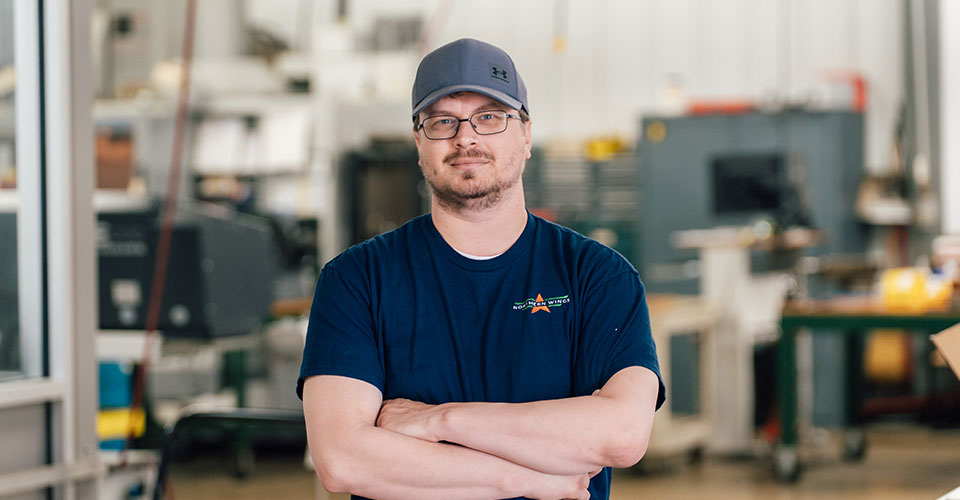
In Newberry, a small town west of Sault Ste. Marie in Michigan’s Upper Peninsula, a man with an eagle eye for detail is helping his employer Northern Wings produce specialized aerospace parts to the highest standards. After seven years of service in the U.S. Navy, Stanley Ware moved to Newberry and found a new calling in the rigorous enforcement of quality at an award-winning small business. Northern Wings was recognized Veteran-Owned Business of the Year by Michigan Works! in 2025.
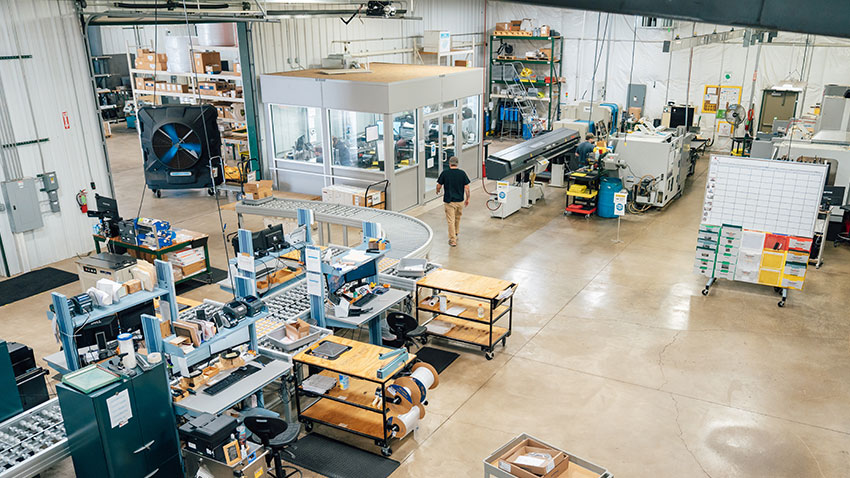
Stanley was trained as a Certified Quality Inspector through a $2,411 grant from the Headwaters North Small Business Support Hub, which serves the eastern U.P. with support from the Michigan Economic Development Corporation (MEDC.) Northern Wings also received a $25,000 Industry 4.0 grant from the MEDC to develop and install an automated conveyor system to help scale operations and reduce risk for injury.
After living in the Chicago and San Diego areas, Stanley appreciates the slower pace, lack of traffic and natural beauty of the eastern U.P. His roots here grow deeper with each passing year.
The Road to Newberry
I was born into a military household in Puerto Rico, where we were stationed for the first three years of my life. From there we went up and down the East Coast; Virginia, Maryland, Florida. Eventually, after my dad retired, we moved to a town in Newberry County, South Carolina, called Prosperity, where I lived from about seventh grade through high school.
It wasn’t by any means a large city, but Newberry itself was about 13,000 to 15,000 people. It had that small-town atmosphere but also a lot of industry. We had a Kraft plant, a Caterpillar plant. After high school I went to work for the Kraft Foods plant in the maintenance planning department.
There were a lot of shakeups because of consolidation, so I moved on. Growing up in a Navy household, I knew the Navy, and so I enlisted. While I was going through the delayed entry program for the Navy and living with my parents, they moved up here to a little town called Newberry, Michigan. My address change was pretty easy.
I joined the Navy as a Fire Controlman Aegis Technician, specifically an AN/SPY-1D radar tech. I worked on radar for seven years. While we were deployed, I got a message that my dad was diagnosed with Stage Four cancer. I flew back and made it about a week before he passed. Glass half-full, I did get a chance to say goodbye, which a lot of people in that position don’t get.
I spent a month getting my mom set up, then flew back to the ship, doing my best to answer any questions or problems that came up from halfway around the world. When I came back, I was thinking about getting out, so I finished off my contract in September 2024. I received my honorable discharge from the Navy, drove back from San Diego to Michigan, and texted Mom: ‘I’ll help out around there for a while, but I’d like a job in the meantime; I don’t want all my savings to dry up.’
She had a friend who worked at Northern Wings and suggested I send in my resume, and about three weeks after I left the Navy, I started working there too. I started out in the warehouse. I did packaging for parts being manufactured in the plant – just getting my feet wet and getting used to the processes.
The Road to Quality
About a week and a half after I started, our operations manager, Chris Burger, along with our quality engineer Adam Tardif, came over to talk to me about the possibility of moving into quality. Unknown to me, that was their original intention from my resume.
I thought it sounded interesting, so I did a two-week trial period training under Adam. Our old quality manager was retiring, and at the end of the two weeks I said I was interested and wanted to keep doing it. Adam moved up to quality manager, and I took his old spot in quality.
I’ve been here almost two years now. The first six months was definitely the biggest training portion: getting certified to have a stamp as a final inspector here, learning to do QC inspection plans and everything related to the job. I did some training courses in Six Sigma, root-cause analysis. I did a couple of trainings in GD&T, geometric dimensioning and tolerancing. I wasn’t certified at the time; I only had the high school-level training, so there was a bit of a learning curve there.
With the Certified Quality Inspector (CQI) program, it’s a much more in-depth view. The final inspector training I did earlier is hyper-focused on what we do here every day. The CQI program is broad. It covers every type of quality inspection, whether you’re inspecting manufacturing brackets and bushings like we do, or circuit cards, or other components. It’s a much bigger learning curve.
There’s a good impact for the company in having someone certified. Some customers actually require inspectors to be certified through the American Society for Quality. There’s also the added knowledge, being able to think outside the box and come up with solutions our narrower view might not provide. It gives insight into alternatives that are established on a global scale.
Starting at 15,000
All our manufacturing is based on customer requirements. We manufacture to print. They provide the print and specifications, and we manufacture exactly to the print and then they install it on whatever it’s intended for: helicopter, plane, jet, rocket. We do other industries too, but aerospace is our focus.
There are some cases when the customer will direct us to deviate from the print; one example would be if they have especially tight timelines, where we may do most of the manufacturing and then they may prime it, paint it or coat it, if they have a provider next door who can complete the project faster. We’ll get it far enough and they’ll finish it. It’s entirely based on the customer: what they request, we provide.
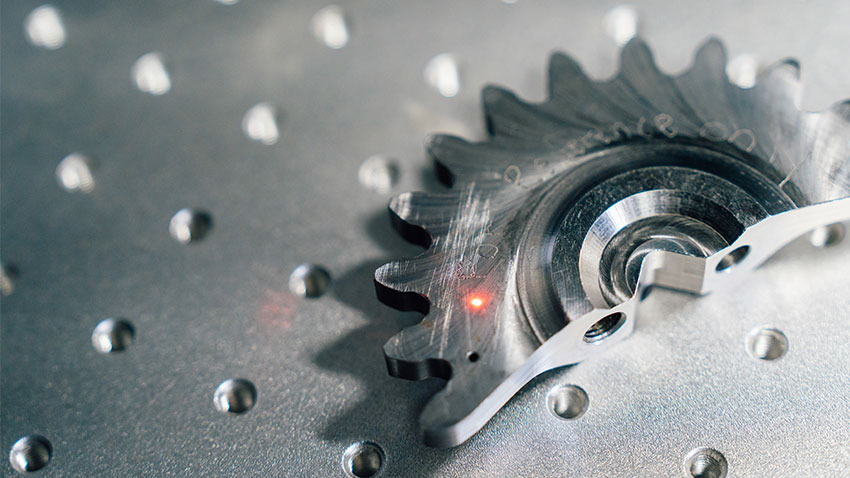
My first inspection involved a visual inspection with a magnifying glass on 15,000 bushings. For a couple of weeks I was staring through a magnifying glass, looking for scratches or other deformations.
I don’t want to sound arrogant, but it was really my experience that made the difference in being able to do that. In the Navy you’re pulling long hours under high-stress situations, but you still have to remain focused enough that when you’re told to push a button, you push the button when they say. Or you perform a very sensitive alignment that lets your equipment run at peak efficiency. You have to be able to turn a knob barely a tiny amount.
After doing that for seven years, you learn the basics: get a good night’s sleep, come in refreshed. Everyone has their own things. I like caffeine to help me stay focused. Others will say background noise or soft music helps.
The Road to Growth
When I first started at Northern Wings, responsibilities were focused around a few very experienced people who came to this company with an incredible amount of knowledge. A lot of us, including me, came from fields that definitely translated and we could build from, but not from this specific industry.
The growth I’ve seen is those responsibilities being spread out. When I started, we only had one person who could do ink stamping a part number onto a part. Now we have four. It might not seem extravagant, but for a small business, that’s significant. We had only one person who could do assemblies; now we have three. We had one person for laser cutting; now we have four. The growth has mainly come from those highly experienced individuals training others and spreading out responsibilities so we have more redundancy built in.
Life in Newberry
I live just outside the village limits of Newberry, about two miles out, right on M‑123, the main street through Newberry.
I love the laid‑back and calm mentality. After living in San Diego for five years, and a year outside Chicago before that, going from where I lived 10 miles from work and it took me an hour and a half to get there, to now, it’s much more relaxing.
There’s a big difference between hiking around here at 70-75 degrees and hiking in the desert at 95-100. The outdoor activities are the biggest draw here: hiking, the tourist attractions, Tahquamenon Falls, the parks along Lake Superior, if you venture out. Once you get off work, you can take a breath, relieve the stress and move on, versus larger areas where you take a breath and then fight traffic for an hour.
In my interview they asked me how long I planned on staying. I’m a couple years in and I don’t have any intention to leave. That tells me I’m starting to get comfortable here.
Learn more about Michigan’s defense and aerospace industry.
