Construction Zone
Philip LaTendresse of Pettibone
As director of engineering and product support and the fourth generation to work at Pettibone, Philip LaTendresse is continuing the legacy of the industry-leading material handling equipment manufacturer
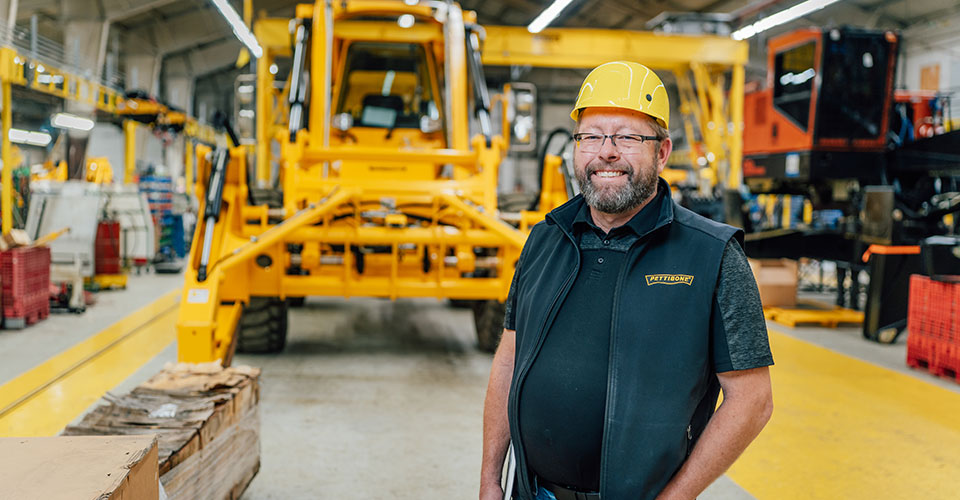
For generations, Michigan’s Upper Peninsula has been home to people who build things – and legacies. In Baraga, Philip LaTendresse is doing both. His history traces back through four generations of innovation and grit at Pettibone, a company that has defined industrial strength since 1881 and continues to be a global player. In fact, his grandfather Philip LaTendresse designed the first Cary-Lift back in 1949, a machine still built by the company today.
Over the years, Pettibone has received support from the International Trade services from the Michigan Economic Development Corporation (MEDC), including the Michigan’s State Trade Expansion Program (MI-STEP), to increase its exposure around the world. With over $68,000 in MI-STEP grants from the MEDC, Pettibone has an ROI of $985.01 for every dollar received from the grants and has reached markets from Australia to Nigeria.
From his grandfather’s first designs to the global reach of the machines they make today, Phil carries forward more than a family name – he contributes to the traditions of hard work and community that are at the heart of the Upper Peninsula.

Deep Roots
“I wasn’t born in the area, but my parents were from here, and they moved back when I was only a couple of weeks old. I’ve pretty much spent my whole life in the U.P.
I'm the fourth generation to have worked here at Pettibone. My grandfather, same name as me, started a company in the 1940s and he developed what we now build as the Cary-Lift. It was the first forward-reaching forklift in the world, and he built that under the LaTendresse manufacturing name.
Pettibone bought the business from him in the early 1950s, so the company has been here since then. My grandfather worked here, my great grandfather worked in the shop and my dad oversaw service and sales for the Midwest.

I went to Michigan Tech, and when I graduated, I went down to Wisconsin to work for Oshkosh Corporation (formerly Oshkosh Truck). I was on their military vehicle side for five years and then found out through the grapevine there was an opening at Pettibone.
My wife and I moved back when I got the job in 2003. I started as a project engineer and then an engineering manager. Now as director of engineering, I oversee the engineers and the tech technical support team, as well as our technical publications writers that do the manuals and parts books.
A Broad Portfolio
Every day is different. At this facility, we build products for four different brands, including Pettibone, BARKO Hydraulics, ARDCO Equipment and a new product called Kraken Machines. We build everything from forklifts and railroad construction cranes to forestry harvesters and mulchers, which is a very, very broad portfolio.
We have a team of highly talented engineers that oversee not only sustaining the current production with upgrades, but also new product development. We build a lot of custom equipment based off whatever customers’ needs are, specifically the railroads. We sell to the majority of the Class I railroads. They buy one product from us, but their specs are so different from each other’s that they're almost different machines. We help them build the machines if they have questions, and then we also provide product support in the field.

An Extra Level of Care
I have service technicians located here in the Midwest as well as down south that answer the phones, and if they have questions, it's nice to have the engineers plugged in as well. They could work hand-in-hand with the engineers on any real complicated issues that they can't figure out. It really helps provide that support, because without support, what good is a company?
In some of the industries, especially forestry, if a machine breaks down, that operator is losing money every hour. We scramble to try to support them. If they have to get parts, we're able to steal parts right out of our production and keep those guys going. It's an extra level of care that a lot of other industries don't have to deal with.
Pettibone has a global reach, and these machines are sold all over the world. Historically, we’ve sold machines into Siberia, and some down in Western Australia. It’s a very broad customer base. We recently had a service technician who had to go to Algeria just to do a training.

Plenty of Room to Roam
Pettibone has been huge for this local area. There are plenty of fabrication shops within a five-mile radius that are on the third generation of family owners that have provided us with fabrications or paint services. We might employ a certain number of people here, but there's at least three times more people locally that support us.
To me, it's nice because we are a small company, but we're owned by a much larger company, Heico. We have great financial backing; we have excellent leadership helping us drive forward to meet our goals. I get to work in a small company daily, but on occasion, work with our ownership so it's more of a corporate environment as well. It's very nice split.
Being in Baraga, it’s a nice rural area, and we get to experience the range of the seasons. Our summers are gorgeous, and our winters are brutal. And the neighbors are great. We have plenty of room to roam; I could walk for hours and not see anybody here.
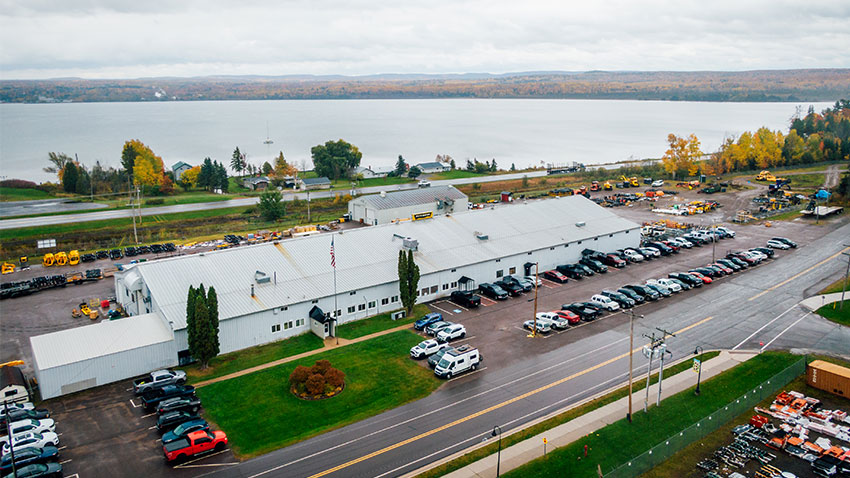
It's also a great place to raise your kids. With Michigan Tech not too far from here, it has a great influence on the broader community. The schools are held to a very high standard, because we have a lot of professors and doctors who raise their families here, and those kids are going to that school. The schools are highly rated and it’s a very diverse area.
With Michigan Tech, a lot of people come from out of the area to go to school or to work, and they fall in love with the place. I’ve known plenty of students and interns who have come through here from the downstate area or lower Wisconsin area, they come to school, they get internships up here and they just don't want to leave.
More recently, with the rural broadband initiatives, we are getting high-speed fiber optic internet into the smaller communities. It has allowed a lot of professionals to relocate if they're able to work remotely, and the cost of living is much less than it is in a bigger city. If you can be just as productive working in the country, it's a win-win for everybody.
Even when I was down at Oshkosh, we liked to recruit from up here because of the work ethic. If you can survive the winters, you're a hard-working person. Being in a rural area, a lot of us grew up working on our own cars and bikes, so from a mechanical engineering perspective, there is a lot of good hands-on experience. It really does filter out through the rest of your career. You have that extra mindset of, ‘Okay, how do we take this apart and fix it?’ Because everything mechanical will eventually break.”