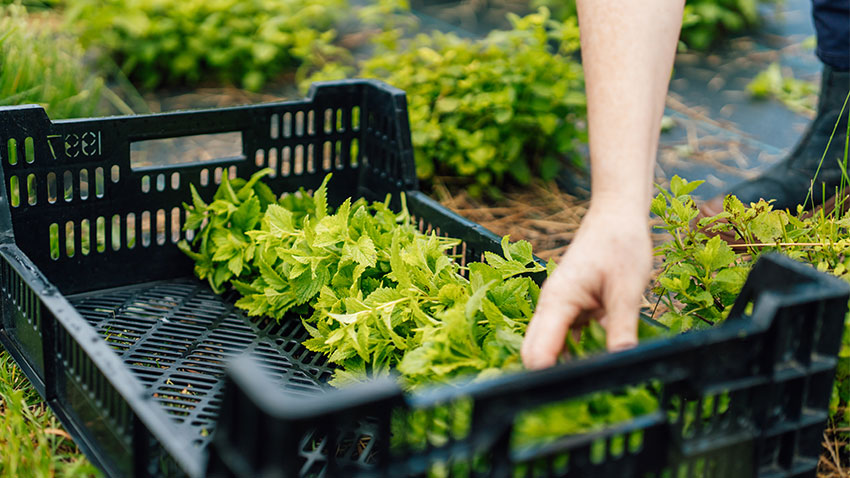
Bee the Change
Lacey and Adam Ingrao of Bee Wise Farms
From their farm in the eastern U.P., Lacey and Adam Ingrao are teaching veterans and others how to keep bees safely and enjoy their benefits, with support from the MEDC and a Small Business Support Hub direct grant.
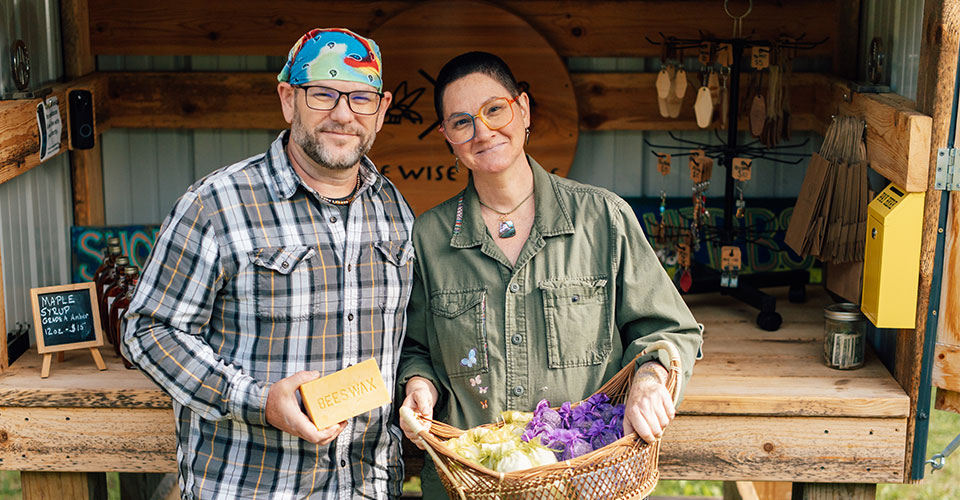
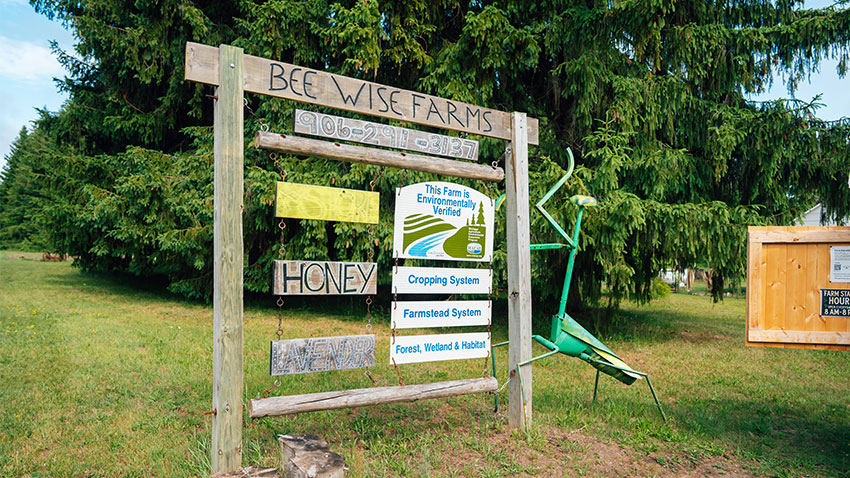
In Newberry, Michigan, a small town west of Sault Ste. Marie, you’ll find a unique hive of learning and healing called Bee Wise Farms. Founded by Lacey and Adam Ingrao, it all started when they moved from California to Lansing, Michigan in 2013 and began beekeeping at the end of 2014 on a two-acre farm, a rented plot from the land bank a few blocks from their home.
Lacey and Adam purchased land in the U.P. in early 2018 and ran farms on both peninsulas for two seasons. In late 2019, right before the pandemic, they decided to relocate to the U.P. permanently. They shut down the Lansing farm, brought many of their plants up to Newberry and opened in 2020.
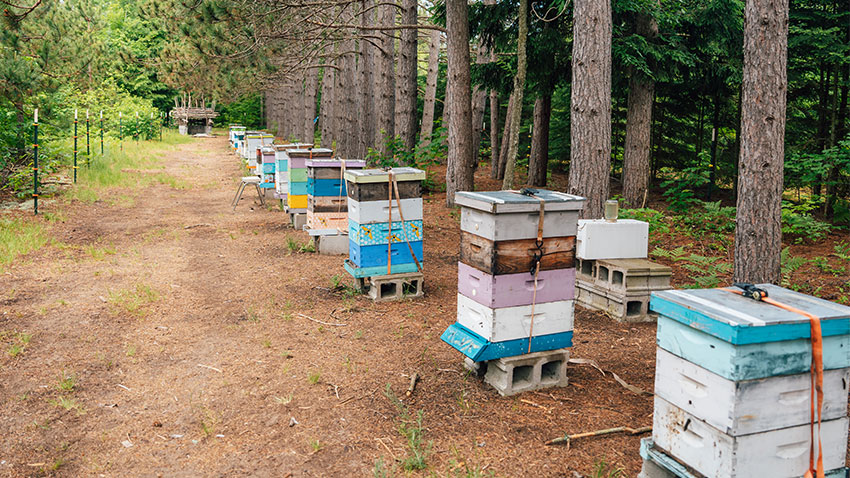
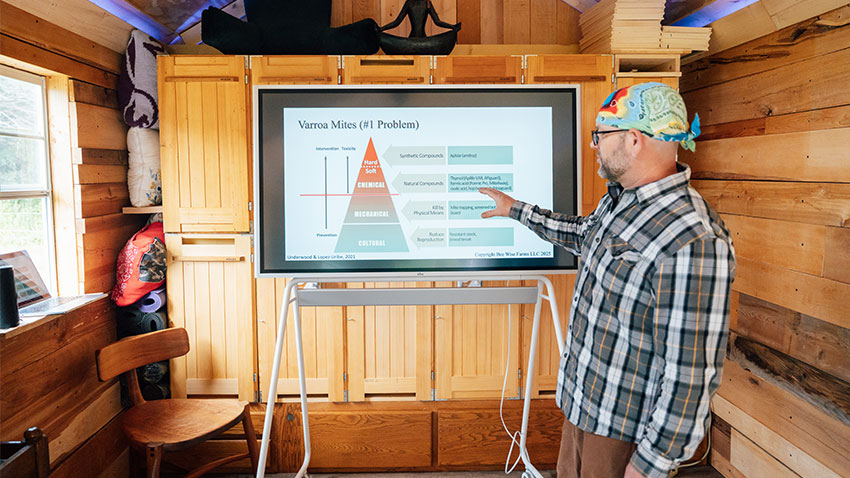
Today, the farm is thriving, offering fresh lavender and honey, apitherapy services for wellness and educational programming like Heroes to Hives that helps veterans reconnect with themselves and the natural world through beekeeping. Through a grant from the Michigan Economic Development Corporation (MEDC)-supported Headwaters North Small Business Support Hub, they were able to purchase an interactive digital smartboard. With a classroom that’s fully AV-capable, they’re able to bring online learners into the hive house to see the latest innovations in beekeeping up close and personal.
Thanks to new, more accessible hive designs like the Slovenian bee house, Lacey and Adam are showing the world how beneficial insects like the humble honeybee can bring sweetness to everyday life.
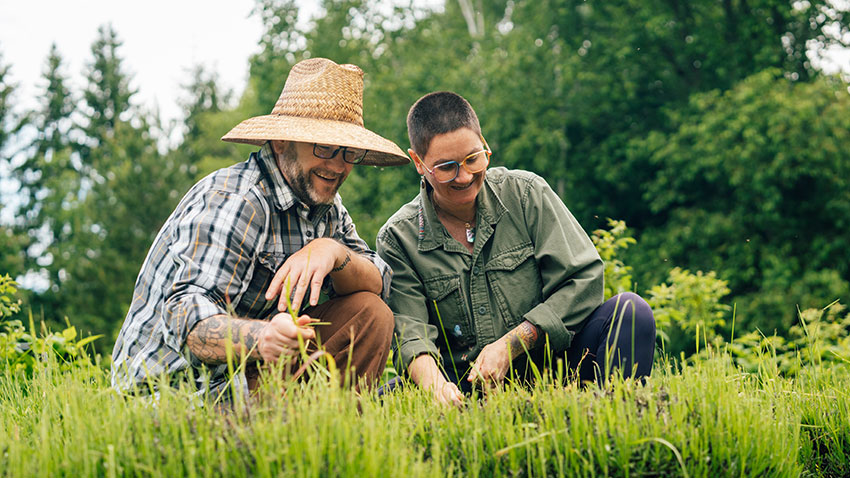
How did you come to start Bee Wise Farms together?
Adam: I grew up in Southern California and worked on farms growing up. Except for the time I was in the military, my life has been focused on sustainable farming and environmental stewardship.
When I got out of the military, and after I met Lacey in 2005, we both had a vision of living with the land, becoming farmers ourselves, owning a farm and having that manifest in our lives. I used my GI Bill to get a degree in agriculture and plant science from Cal Poly in California and was recruited to Michigan State to finish my PhD in agricultural entomology, with a primary focus on beneficial insects.
After we moved to Michigan, Lacey was vacationing in the U.P. and fell in love with it. We started coming up to the Tahquamenon Falls area every summer. The places I worked growing up were farms with storefronts, big orchards where people came and bought goods right at the farm. Because it’s a vacation destination, we knew Newberry would be good for that.
Lacey: We both grew up in the same city but didn’t know each other until our early 20s. When we reconnected, Adam went into entomology and bugs and all these beautiful things, and my work has always been nature-centered… how to get people to reconnect with the land and our food and ourselves.
My education took me to a master’s in transpersonal psychology, which is essentially the connection beyond the self, to the things nature has to offer in the elements and our relationship with them. I’ve done somatic movement and mindfulness work and taught that for the last 20 years or so, allowing people to tap back into their bodies. With my work with people and his work with bugs and the land, that coalesced into the beautiful farm we’ve created.
What was your career path like to get there?
Adam: My career path started on farms and never really stopped until we had our own farm. At Cal Poly I ran the herbaceous garden and the All-America Selections trials. I worked for the largest commercial ornamental plug producer in the U.S. in California and did cut-flower production. My career has spanned all areas of production agriculture except vertebrate livestock.
During my PhD, I primarily worked with the asparagus industry in Oceana County, developing biological control strategies for major pests. Most of my academic work has been focused on farms. Our nonprofit work with Michigan Food and Farming Systems (MIFFS) has spanned since 2014. I found MIFFS on MSU’s campus, met with the executive director, and said I wanted to work with veterans and help them understand how agriculture could be a pathway to wellness. She basically gave me a blank card and said, ‘Do whatever you want to reach veterans.’” That’s where we started veterans outreach and the Heroes to Hives program in 2015.
Agriculture helped me after my transition from the military. I was in the Army, post-9/11, as a Patriot missile fire control operator, tasked with identifying things in the sky and determining whether they were friendly or not.
I was in for one year. I suffered a career-ending injury in a training accident and received a medical discharge. Because I had a six-year enlistment but only served a year, part of the work I do with veterans is my way of continuing to give back to that community. I wasn’t able to serve overseas with my battle buddies, but I can support them when they come home through the services and programs we’re developing.
When I completed my PhD, I worked for MSU Extension for three years as the Veterans Outreach Coordinator. I worked with 600-plus Extension employees across all 83 counties, training them to work with veterans more appropriately. I also helped develop programming tailored for veterans, and I still do policy work around the Farm Bill, specifically for veterans, with advocacy and writing publications supporting veteran-friendly policies.
What does your day-to-day work look like on the farm and in the community?
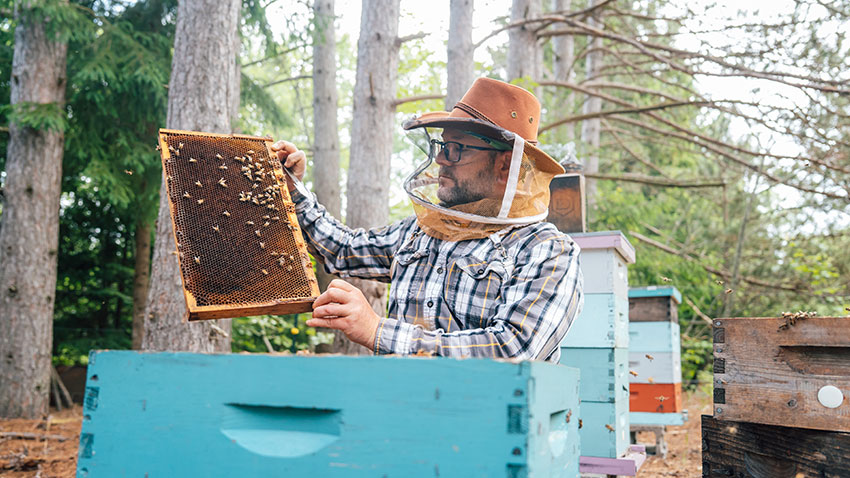
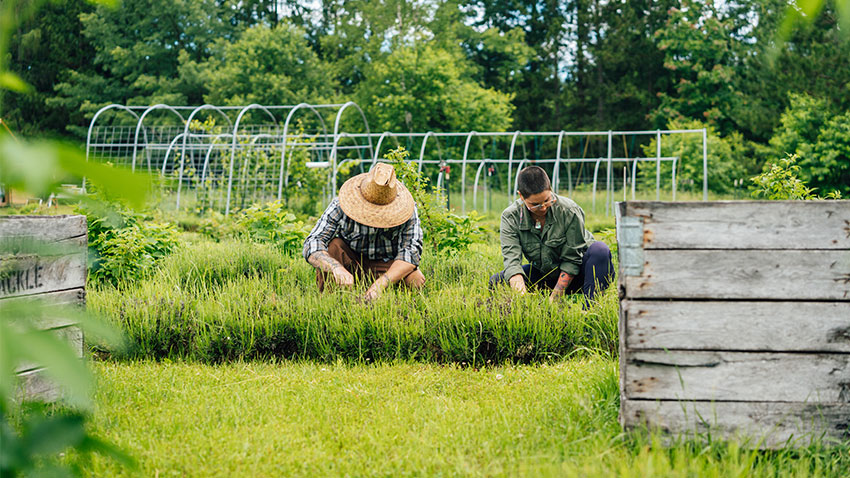
Lacey: Every day at the farm is different… that’s part of why we love the work. Depending on the weather and the season, nature shifts and asks us to be flexible. We grow a large variety of lavender, along with vegetables, flowers and other herbs to support the immune system and wellness. I don’t do a ton of beekeeping anymore after years of it; I have some medical stuff that doesn’t always allow for steady balance, so I adjust and work with that. I also do the behind-the-scenes work: the website, product development, harvesting, processing and keeping those things going.
I’m essentially the farm apitherapist.
What is apitherapy?
Lacey: Apitherapy is the use of honeybee products and our connection to the hive for wellness. It’s a very traditional form of medicine and widely used in Eastern Europe, and emerging more in the U.S. On the farm, we shut down our store last year and reopened our building as a Slovenian bee house for apitherapy. We offer experiences such as beehive air therapy, acoustic therapy, mindful movement with the bees and education and awareness around bee venom and its benefits: antibacterial, antiviral, antimicrobial. There are beautiful benefits from honeybee products and how we use them to create wellness.
One of the simplest sessions is our beehive air therapy. You sit, bring mindfulness into the body and breathe in compounds the hive offers—supporting the respiratory and immune systems. We have a small unit attached to a beehive, with a mask and tube. A tiny fan pushes air from the beehive into the mask. You sit anywhere from 20 to 45 minutes and breathe in the hive’s compounds. A prime compound is propolis, known for its strong anti-inflammatory effects.
What have been some of your most memorable experiences as beekeepers?
Adam: Over almost 20 years of keeping bees, the most impactful experiences have been seeing the impact beekeeping can have on people. In Heroes to Hives, about 20,000 people have accessed the educational program. Every time I talk to a student and hear how becoming a beekeeper transformed them, it’s heartwarming. Veterans who’ve seen horrific things, dealing with moral injury and things they can’t talk about, come to bees and find peace working with nature. Watching individuals who’ve put up a lot of armor to protect themselves... seeing them soften through a connection with an insect is powerful.
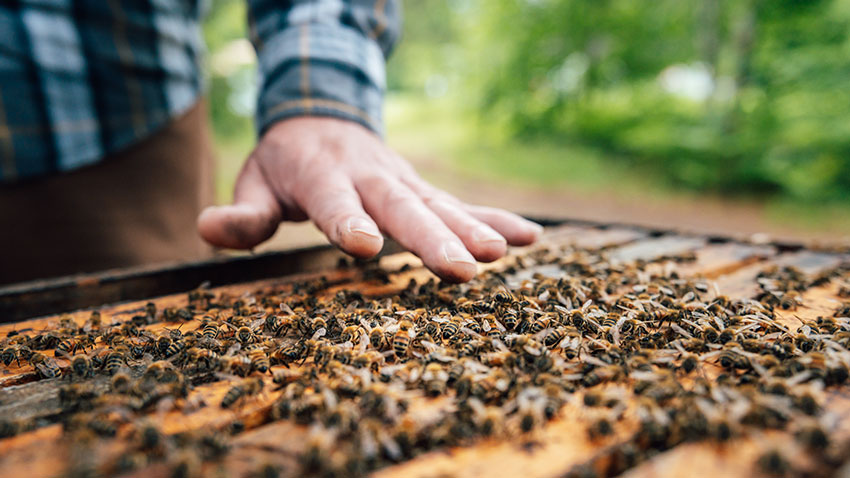
When we use bees as a conduit for healing, we open the opportunity for people to see they’re not alone, that they’re part of the natural world and they can reconnect with nature in a healing way.
We also say, ‘You served national security. Now, as a beekeeper, you can protect national food security.’ Personally, those are the most powerful experiences… seeing veterans go from closed off to open and ready to receive life.
How did the Small Business Support Hub (SBSH) grant help your business grow and change?
Adam: We’ve grown and changed constantly. We pride ourselves on being super flexible. To be successful as a small farm, you have to listen to your customers, react to the market and protect your investment.
Our business focuses on education, agriculture, wellness, community and spiritual engagement with nature. The SBSH grant had a big impact. Much of our work isn’t on the farm… Heroes to Hives is fully online, Beekeeping Above the 45th Parallel is fully online. The grant allowed us to get an interactive digital smartboard. Now we have a classroom that’s fully AV-capable, running classes in our hive house with presentations. The board has a camera, so we can livestream. We’re planning a new course next year around the Slovenian beehives; that smartboard’s video capability lets us do complete live online education around a new hive that’s coming to the U.S. and has a big educational need.
In Slovenia, they developed the AŽ hive. You work from the back, so you never lift heavy boxes. Management is different, and that’s why education is needed, but the advantages for people with injuries or disabilities are huge.
How does Michigan support small farmers like yourselves?
Adam: We’ve received a lot of support, especially through the Economic Development Corporation up here. Tammy Henry has been awesome, keeping us abreast of what’s available: partner programming, grants, things like that. That’s been extremely helpful. Coming from California, we feel the agricultural community, especially small farming, is very strong in Michigan. There’s a lot of support for farmers: MDARD grants, for example. There’s always room for improvement. I’d love to see more support on property taxes for small agricultural operations. Overall, the state’s doing a pretty good job supporting small farmers—better than many other states.
What are some of your favorite things about the Newberry region and the eastern U.P.?
Lacey: It’s such a unique place, with the landscape, the forest, the amount of space, the close connection to the natural world. We love the slower pace and the changing seasons. Nothing’s perfect and there’s always room to grow, but that attention to the land keeps us here and loving this space.
Adam: We’re surrounded by as much water as you can be. The natural elements that shape this area are extraordinary. I don’t know if it exists in many other places.
What are your dreams and hopes for your community looking toward the future?
Adam: I’d love to see Newberry continue to grow as a destination for people to experience the beauty of the U.P. For the small farming community in the U.P., I’d like to see us come together more. There are a lot of folks like us, people who’ve transitioned to the U.P. or are native, doing similar work with the land and developing sustainable farm enterprises. I’d love to see a hub to support those individuals, specifically small farmers, because small agriculture is, in my opinion, the most important part of agriculture. It directly feeds the community.
Learn more about the MEDC’s Small Business Support Hubs.