
Monday, June 8, 2026
Special-Lite
The Decatur door maker celebrates completion of a significant expansion, supported by the Michigan Business Development Program, and the launch of a highly durable sliding door system for healthcare and educational settings.
Imagine the kitchen door in a restaurant, with servers constantly moving in both directions, pushing through with hands full. Think about the wear and tear it takes on a daily basis and the durability it needs to function without a hitch for years on end.
That high-quality kitchen door just might be made by Special-Lite, based in the village of Decatur, Michigan, a half-hour drive southwest of Kalamazoo. “Double-acting traffic doors are a newer one for us. There aren’t a lot of manufacturers in that space, so we’re excited to be able to offer the same durability that we're known for and some of our nice custom finishes,” said Shelby Brooks, the company’s senior manager of marketing and communications.
Sliding Doors
Since its start in 1971 as Decatur Quality Glass, an aluminum door and frame company, Special-Lite has grown into a premier manufacturer of engineered architectural products including commercial fiberglass and aluminum entrance systems, interior aluminum framing with swing or sliding aluminum-framed doors and fiber-reinforced polymer bathroom partitions. Its flagship product is a hybrid door with a pebble-grain FRP face that became known as “the school door,” developed for schools that need extreme durability.
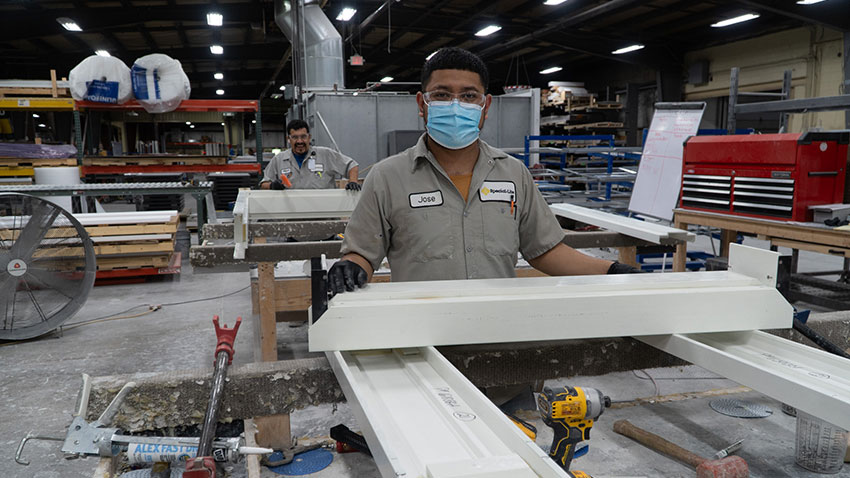
We manufacture a very custom and durable product. Every order is different. Every application we go into has unique needs. It’s hands-on craftsmanship that results in a product that's very durable, and we're very proud of.
Special-Lite recently launched a surface-mounted sliding door system, used frequently in healthcare environments and offices and in a sizable project for the University of Michigan’s Dearborn campus. “There were some major pain points with the solutions that were previously on the market, such as durability issues,” said Brooks. “The common solutions on the market have a trigger system on the soft close mechanism, and it tends to break so often that you have to plan on replacing it.”
Unlocking Doors
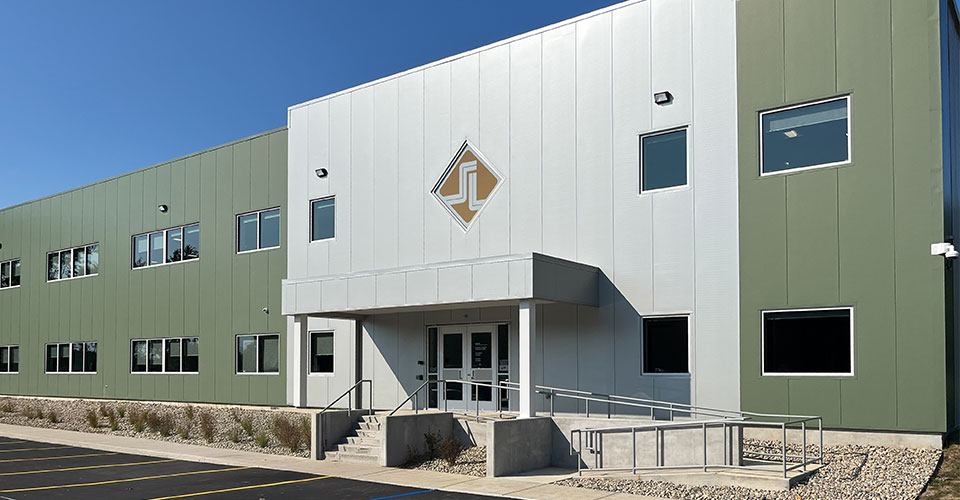
As it grew over the years, Special-Lite added manufacturing facilities in Arkansas that were later relocated to Benton Harbor, and in 2021 expanded the Benton Harbor facility with support from the Michigan Economic Development Corporation’s Michigan Business Development Program (MBDP). By early 2025, Special-Lite’s growth was again running into space constraints, both for offices and manufacturing. In March 2025, the company announced plans to further expand production capability in Decatur by constructing a new 59,000 square-foot building to support growth in the healthcare industry and others through new product launches, with a capital investment expected to reach $15,652,000 and the creation of at least 55 new jobs over the next ten years. The expansion was supported by the Michigan Strategic Fund through a $250,000 MBDP grant.
Opening Doors
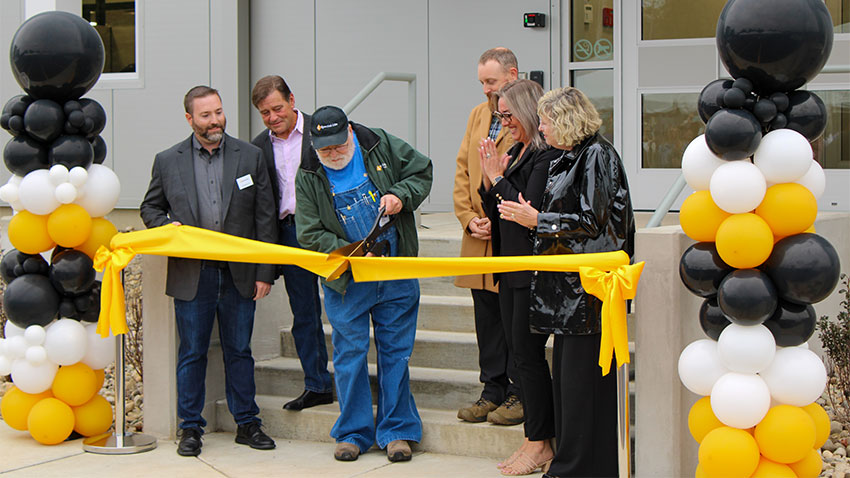
Construction went quickly, and Special-Lite held a grand opening for the new facility in October 2025. “In our new space, we have an employee training area as well as an installation training area,” said Cassandra Brautigam, the company’s chief financial officer. “The more space you can have, the more flexibility you have in how you operate, what your manufacturing flow looks like and what you can do for a customer's needs.”
That space is filling up fast. “Right now, we have 290 employees between our main headquarters and manufacturing site here in Decatur and our Benton Harbor manufacturing facility,” said Brautigam, reflecting an additional 32 employees since the March 2025 announcement.
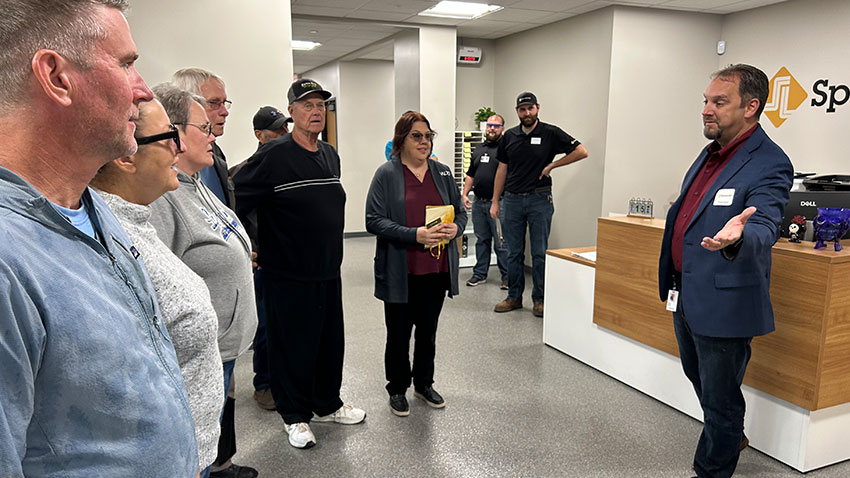
Special-Lite’s growth has been supported by partners at the state, local and regional levels, including Southwest Michigan economic and community development organization Market One. “Both the MEDC and Market One have been partners to have the conversation with and enable us to grow within the community that we want to keep being in,” said Brautigam.
“Our community has been very supportive in this as well, because there's more than just funding. When you get that involvement, it helps spread the word and build your brand as a major employer, investing in the community and investing in our people. We care very much about our community. We want to continue to invest here.”