
Monday, May 18, 2026
Howmet
With support from the Michigan Business Development Program, Howmet is on track to grow the workforce at its Whitehall facilities, where the company manufactures state-of-the-art airfoils for jet engines and gas turbines.
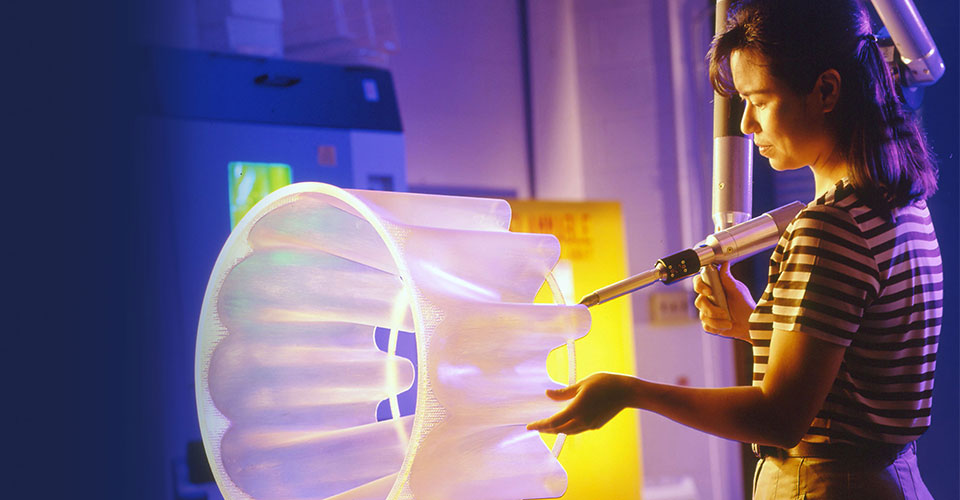
The inside of a jet engine or gas turbine is a challenging environment for engineering, with immense heat and force inflicted on components whose reliability and longevity are essential. A Michigan company has mastered the intricate and difficult processes needed to manufacture suitable parts, with a growing footprint and workforce thanks in part to support from the Michigan Economic Development Corporation.
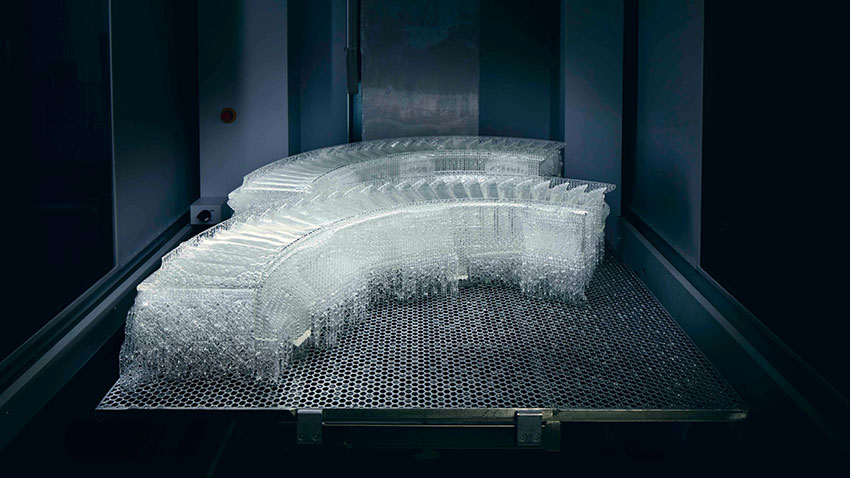
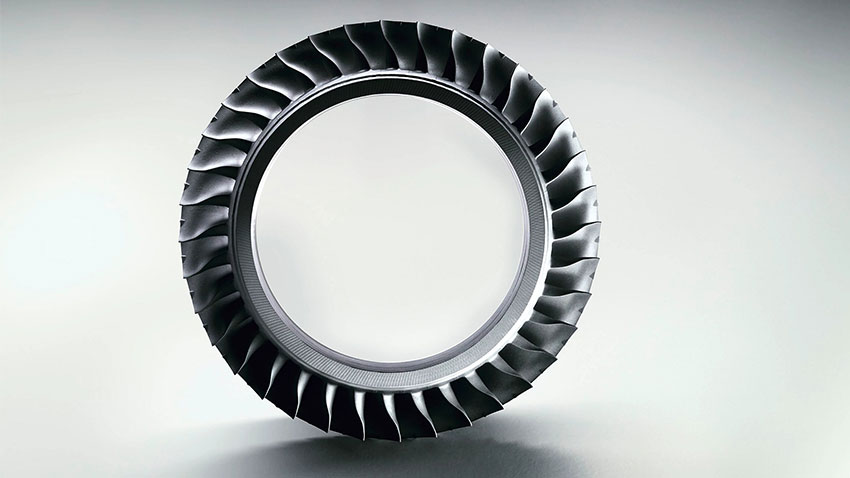
Howmet is a leading producer of complex investment casting superalloy airfoils for aerospace engines and land-based industrial gas turbines. The company has "perfected a technique for growing single crystal turbine airfoils, a grain structure that aligns better to centrifugal force inside the engine, prevents deformation and increases blade temperature capability and life" and "engineered ceramics that form internal passages in the turbine airfoils to increase the flow of cool air across the metal surfaces," according to its website.
Over the past 75 years, the company has undergone several ownership and name changes. It began in 1951 as part of Michigan Steel Castings Company (MISCO), and the road between two of its plants is still known as Misco Drive.
In December 2024, the Michigan Strategic Fund Board approved support for the company’s expansion of its Whitehall facility through a $5.1 million Michigan Business Development Program (MBDP) grant. Howmet’s $107.5 million investment included plans to create 300 new jobs in Muskegon County and construct a new building for producing ceramic cores.
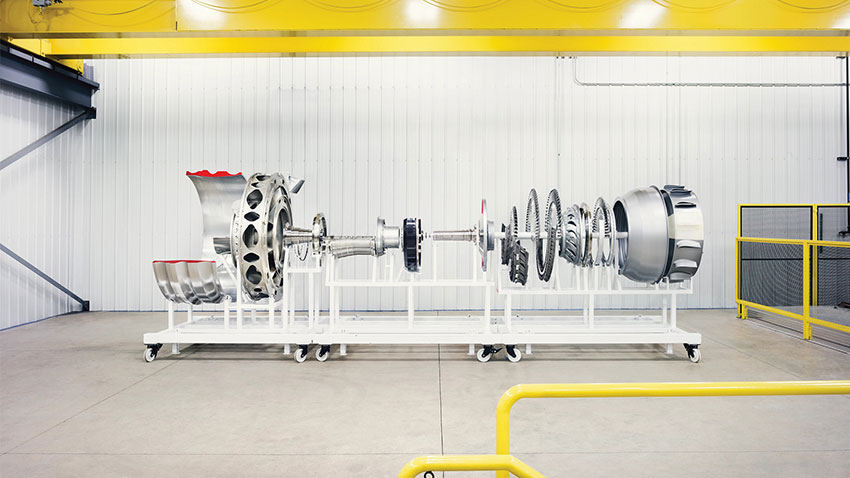
Today, the company’s presence in Whitehall has grown from one plant to multiple, and hosts the global headquarters of Howmet’s Engine Products division, which can supply more than 90% of the structural and rotating components for aircraft jet engines.
In addition to hosting the division’s global R&D center, the Whitehall location manufactures products which can be found across nearly every Western commercial and defense aircraft engine flying today. Howmet components were also integral to powering the Space Launch System (SLS) rocket used in NASA’s Artemis II mission, with the main RS-25 engines using its castings and forgings. Howmet also developed the forging process for Orion’s Forward Bay Cover to protect the parachutes during re-entry for a safe landing.
“There are several factors that have always been important to the way we view the Whitehall site from the perspective of growth and expansion,” said Amy Heisser, director of Human Resources at Howmet. “We have great state and local partners who are responsive to our needs – whether that’s the City of Whitehall, Michigan Economic Development Corporation, elected officials, etc. – they understand how to work with us to solve the challenges that businesses face expanding and growing.”
The company's revenues grew substantially to $8.3 billion in 2025, up 11% year-over-year, according to a February 2026 release. Looking forward to 2026, CEO John Plant identified reasons to anticipate future growth: “Commercial aerospace continues to benefit from rising passenger demand... In addition to robust growth in new builds, engine spares needs continue to increase. Defense markets are also very healthy... The gas turbines business is entering its largest growth phase in years, with extremely high demand for electricity generation.”
More demand for Howmet’s products might mean more production in Michigan. Howmet is already Muskegon County’s largest manufacturer, employing over 3,500 Michigan residents, including 1,300 unionized workers, making it the largest employer of unionized employees in Michigan’s aerospace industry. Fortunately, deep ties to the community and workforce have built a strong relationship with Whitehall.
“This is a great community and our employees are proud to live and work here. Employee service activities and giving campaigns support the United Way and local non-profits,” said Heisser. “Howmet Aerospace Foundation – the independently endowed charitable arm of Howmet Aerospace – has supported STEM, workforce development and community enhancement projects totaling more than $13 million over the past two decades.
“Finally, we have access to the state’s talented workforce, ranging from those graduating high school and vocational schools with skills needed to start their careers, to those who have refined those manufacturing skills at community colleges, to engineers graduating from the state’s leading research universities.”
As continued demand drives continued growth, Howmet is demonstrating the alignment of people and place that makes a blockbuster project possible and showing the world that if you want to make something difficult, you can make it in Michigan.
Learn more about the Michigan Business Development Program.