Wednesday, March 18, 2026
Two Redevelopment Projects in Detroit Create Housing and Commercial Space
LANSING, Mich. – Today, Governor Gretchen Whitmer announced two redevelopment projects in Detroit receiving support from the bipartisan Revitalization and Placemaking (RAP) program and Build MI Community (BMC) Grant initiative, creating new opportunities for housing and commercial space.
In Detroit’s Brush Park neighborhood, two undeveloped parcels will be converted into a residential community, while a vacant, two-story building in Detroit’s Mexicantown neighborhood will be rehabilitated into a mixed-use development featuring apartments and restaurant space. Together, the projects will generate a total capital investment of over $17.5 million in the state while activating vacant properties and increasing community vibrancy.
“Support for these projects in highlights Michigan as the best place to grow and thrive,” said Governor Whitmer. “Our growing economy and ‘Make it in Michigan’ strategy that invests in people, revitalizes places, and wins projects is paying off. Our population is growing, and we’ve been ranked as a top state for opportunity and doing business. Programs like RAP help us build on this progress, attract and retain talented workers, lower costs, build housing, and enrich our communities. Let’s keep working together to get things done for our state.”
The RAP program provides access to gap financing for place-based infrastructure development and real estate rehabilitation and development, while BMC was created to activate underutilized or vacant space into vibrant areas by promoting capital investment into redevelopment projects being taken on by developers and property owners with limited real estate development experience.
“Through these investments from the Revitalization and Placemaking program and Build MI Community Grant initiative, the MEDC is supporting vibrancy and growth in the city of Detroit as part of the state’s ‘Make It in Michigan’ economic development strategy,” said the MEDC’s SVP of Community Planning and Development Readiness Michele Wildman. “We look forward to seeing how these developments activate vacant property, increase residential density and generate new economic activity.”
In Brush Park, two vacant, undeveloped parcels at 301 and 321 Edmund Place will be converted into a modern, mixed-use residential community, adding affordable housing and further connecting Detroit’s downtown to its adjacent neighborhoods.
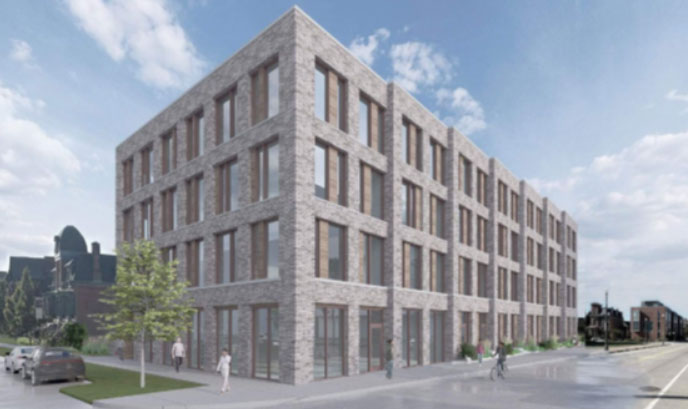
When complete, the project will create 57 new apartments with 20% of the units reserved for households earning no more than 80% Area Median Income and generate a total anticipated capital investment of $15.6 million, thanks to the support of a $3.5 million RAP grant from the MEDC. The project will also include approximately 1,200 square feet of ground floor retail space, envisioned to accommodate a neighborhood café or coffee shop that will serve both building residents and the surrounding community.
The site is two blocks east of Woodward Avenue, within walking distance of Little Caesars Arena and the Detroit Medical Center campus.
Zain Mikho, founder and managing principal of Woodward Capital Partners (WCP), serves as the sponsor and 100% owner of the 301 & 321 Edmund Place development. WCP has recently completed multiple redevelopment and restoration projects in Midtown Detroit, including the $2.5 million redevelopment of 632 Prentis Street and the $1.6 million restoration of the Campbell Symington House, further demonstrating a commitment to Detroit’s resurgence.
“Our development team is deeply grateful for the financial support and partnership provided by the Michigan Economic Development Corporation,” said developer Zain Mikho. “The RAP grant is instrumental in making this multifamily mixed-use development possible, which will designate 20% of the units as affordable housing at 80% of AMI. Located near downtown Detroit, the project is designed to contribute to the vitality and walkability of the neighborhood while expanding access to quality housing. We feel privileged to work alongside MEDC to bring this development to fruition and to support the long-term growth of the surrounding community.”
In addition to the RAP grant from the MEDC, the City of Detroit is providing significant local support for this project, approving a Neighborhood Enterprise Zone valued at $2,647,409 and Housing Tax Incremental Financing valued at $2,938,810. The city also sold the property to the developer at a discount of over 50% of market value, and Detroit Brownfield Authority has issued a Brownfield Revolving Loan Fund commitment for a 1% loan of $1,000,000.
“When we envisioned the Housing TIF program, we saw the potential for developments like 301 Edmund Place — turning underutilized sites into housing attainable for working families,” said Amy Hovey, MSHDA CEO and Executive Director. “Since 2023, Housing TIF has helped communities close financing gaps and move projects from concept to construction. In Detroit’s Brush Park neighborhood, it will create 57 new homes, including apartments for households earning up to 80 percent of Area Median Income. It’s thrilling to see the TIF tool being used as intended to expand housing supply and help more Michiganders live and work in the communities they choose.”
“301 Edmund Place is a strong addition to Brush Park. This development brings 57 residential units to the neighborhood, with affordable options built in, and activates ground-floor retail that will serve the community every day,” said David Laurence Howell, senior vice president of Real Estate Services at the Detroit Economic Growth Corporation. “The demand for quality multi-family housing in Detroit is growing, and this project is a direct response to that. We’re proud to see it come to life in one of the city’s most architecturally distinctive neighborhoods.”
In Mexicantown, a vacant, two-story building located at 3600 West Vernor will be rehabilitated into a mixed-use development featuring four apartments and a restaurant and bar on the ground floor. The project will consist of substantial interior and external upgrades and supports the City of Detroit’s strategies for near and long-term housing, retail development, streetscape improvements, walkability, parks, and infrastructure improvements.
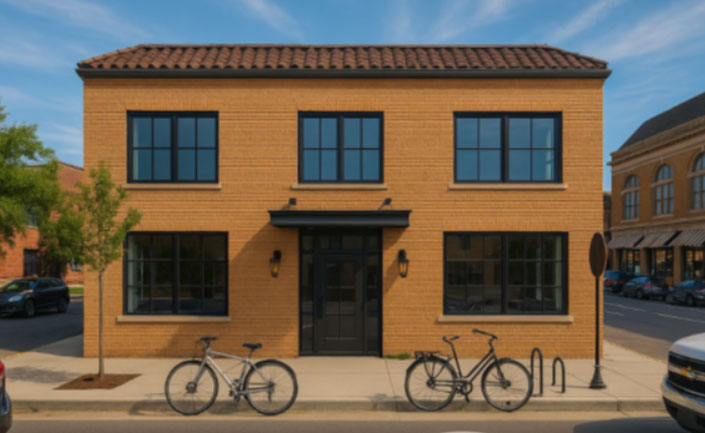
A BMC grant from the MEDC totaling $385,000 – including $35,000 for technical assistance – has been awarded to support the project, which will bring a total anticipated capital investment of $1,994,444. The project will also leverage a $1,000,000 Strategic Neighborhood Fund (SNF) grant administered by Invest Detroit. The SNF is a public-private partnership between the City of Detroit and local philanthropic organizations, focused on advancing equitable commercial corridor development, housing stabilization, and park improvements citywide.
Developers Tanya Saldivar-Ali and Luis Ali grew up in southwest Detroit. The couple celebrated the ribbon cutting for the Design Build Green Hub in May 2025, a BMC-funded project that serves as the headquarters for their construction business, AGI Construction, LLC, and Detroit Future Ops, its social impact arm. They are working with Uddin Development Consulting as their development consultant for the West Vernor project.
“Through collaboration with the Michigan Economic Development Corporation, Invest Detroit, the City of Detroit Strategic Neighborhood Fund, and AGI Construction, we are proud to announce the next chapter of the historic Norteña building in Mexicantown,” said Tanya Saldivar-Ali, business development director for AGI Construction. “As Southwest Detroiters, it gives us immense pride to acquire this property from another Latino family whose business has been part of the economic lifeline and cultural fabric of our community for more than fifty years. Spaces like this carry sacrifices, stories, memories, and the everyday experiences that shape who we are as a neighborhood. Our intention is to honor that legacy while investing in its future — creating inclusive spaces that celebrate our roots and remain authentic to the culture, history, and evolving spirit of Southwest Detroit. This project is more than a building. It represents community continuity, cultural preservation, and a commitment to ensuring that development in our neighborhoods reflects the voices and values of the people who have long called this community home.”
About Michigan Economic Development Corporation (MEDC)
The Michigan Economic Development Corporation is the state’s marketing arm and lead advocate for business development, job awareness and community development with the focus on growing Michigan’s economy. For more information on the MEDC and our initiatives, visit www.MichiganBusiness.org. For Pure Michigan® tourism information, your trip begins at www.michigan.org. Join the conversation on: Facebook Instagram LinkedIn, and Twitter.