
Thursday, January 15, 2026
Generation Hydrogen: Michigan’s Clean-Energy Transition
With its strong manufacturing heritage and leadership in mobility innovation, Michigan has the opportunity to fuel the future with clean energy
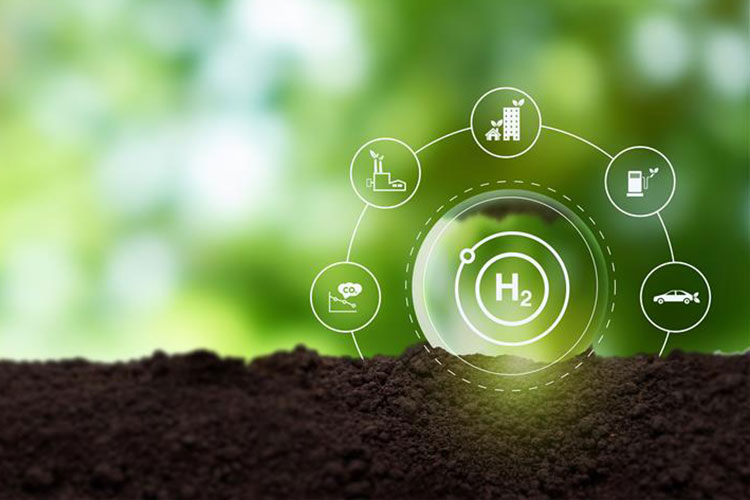
Hydrogen is having a moment. As the most abundant chemical element, hydrogen is poised to be an energy gamechanger – bringing new options for Michigan above and beyond existing fossil fuel and renewable resources. In January 2026, Governor Gretchen Whitmer issued an Executive Directive for state agencies to support exploration of potential underground hydrogen reserves throughout the state, building on past efforts to integrate the pollution-free fuel into Michigan's energy system.
Though hydrogen is the most abundant element in the universe, it is rarely found naturally in its elemental form on Earth. An odorless, colorless, flammable gas, hydrogen is produced either chemically using fossil fuels, thermally via nuclear energy, or through electrolysis (using electric current to separate water molecules into hydrogen and oxygen.) It can also occur naturally underground. Hydrogen can generate electricity using fuel cell technology, which combines it with atmospheric oxygen to produce an electric current and water vapor, with no hazardous exhaust fumes.
Currently, 96% of hydrogen produced worldwide is made using natural gas or coal. The lowest greenhouse gas emissions result from production of hydrogen via electrolysis using renewable energy.
Thanks to partnerships, the state’s natural geology and transformational projects, the elements are coming together for Michigan to lead in a hydrogen-fueled future.
Innovation
Michigan is establishing the viability of hydrogen technology for public transit with the fuel cell buses operated by the Flint Mass Transportation Authority (MTA), unveiled in June 2024. They support the MTA’s ongoing commitment to reducing harmful emissions, while building on the agency’s innovative alternative fuel technology and training program.
Other Michigan businesses are exploring technologies that make it easier to transport hydrogen as elemental hydrogen gas (H2) or in combination with other elements, including improvements to ammonia (NH3) handling. AmHyTech is a Detroit-based startup that received support from the Michigan Small Business Development Center to develop, refine and commercialize their technology, which facilitates the safe storage and transportation of ammonia at room temperature and low pressure.
Geology
As with any fuel, a key part of the supply chain will be ensuring that sizeable reserves are available at all times. While hydrogen can be stored for long periods in above-ground tanks, some places have the potential to store sizeable quantities of hydrogen underground. Thanks to our considerable salt deposits, Michigan could be one of the few states with this potential. Rock salt has a very low hydrogen permeability, which ensures minimal loss of hydrogen or contamination with the geological surroundings. Hydrogen produced in Michigan could be safely and securely stored underground until needed. Furthermore, such facilities could act as backup generators by using stored hydrogen to generate electricity at times of high demand on the grid.
Michigan may also have unidentified deposits of geologic hydrogen naturally occurring underground. A 2025 study from the United States Geological Survey identifies Michigan as part of a region “in which all major components necessary for a hydrogen accumulation likely are present—a source of sufficient hydrogen generation, porous reservoirs for storage, and seals to prevent leakage.”
Collaboration
The hydrogen economy is at an inflection point, presenting both significant opportunities and complex challenges. Michigan is firmly positioned to capitalize on the opportunity due to our existing natural, industrial and academic assets. However, the hydrogen sector faces considerable challenges, including economic uncertainty, lack of resources (testing facilities, cost-effective supply chain, etc.), higher capital costs, competition from other states and more developed alternative technologies, and a lack of policy support/certainty.
To harness this potential, Team Michigan has developed additional initiatives to act as a centralized industry accelerator and convener for the hydrogen economy:
- 2025: The Michigan Council on Future Mobility and Electrification proposed the creation of the Michigan Hydrogen Collaborative. Leveraging insights from previous accelerators, the MEDC would establish a nonprofit accelerator with academic, government, and industry partners. This collaborative accelerator would aim to position Michigan as a leader in hydrogen technology by focusing on three core activities: ecosystem building, funding to support R&D, and workforce development.
- October 2023: Governor Whitmer announced that a Michigan-backed clean hydrogen hub project, the Midwest Alliance for Clean Hydrogen (MachH2), won up to $1 billion by the U.S. Department of Energy (DOE). The project was among only seven projects to win this transformational funding. In Nov. 2024, MachH2 announced a cooperative agreement with the DOE to secure initial federal funds.
- September 2022: The University of Michigan’s Center for Sustainable Systems released a report with funding from the MEDC and university’s Office of the Vice President for Research. “Hydrogen Roadmap for the State of Michigan” served as a high-level assessment intended to help guide planning and future detailed analysis of a Michigan “hydrogen ecosystem” that encompasses production, delivery, storage and end-use applications.
With the state officially designated as part of a hydrogen hub and exploring new opportunities in energy innovation, Michigan is positioning itself as a pioneer in hydrogen development and adoption.