
In Development
Shaker Manns of Eskay Holdings
As an engineer-turned-developer, Shaker Manns is using his expertise to retrofit a Detroit apartment building into a highly energy-efficient space with the support of the MEDC
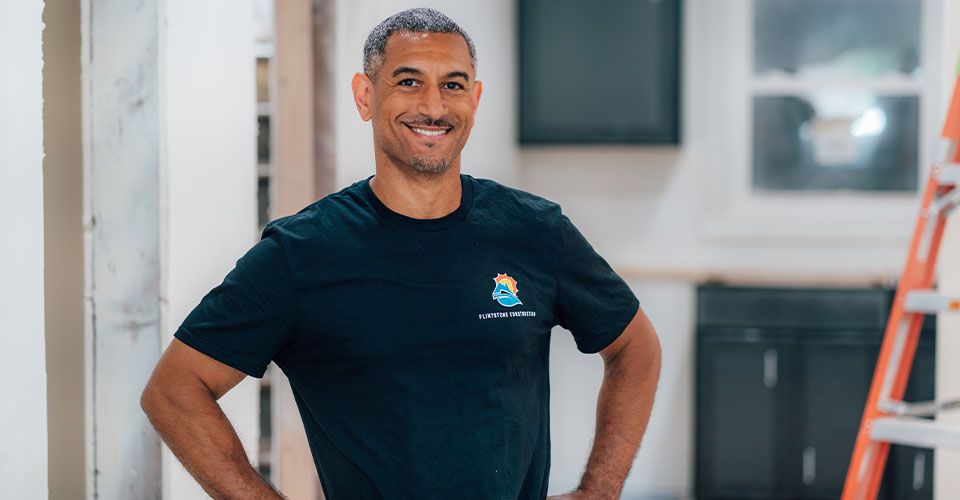
Growing up with a large family in Flint, Shaker Manns says an early exposure to the automotive industry and having uncles who were masons, electricians and carpenters became the fabric of his upbringing and shaped the trajectory of his future. “I decided to stand on the shoulders of those before me and use their talents and gifts to take it to another level,” he said.
After attending the University of Michigan and University of Tennessee with a focus on electrical engineering and business, Shaker pursued a career as a power engineer, studying the power grid system for the Tennessee Valley Authority. When he and his wife wanted to start a family, they decided to move back to their home state. Here in Michigan, he continued his work with power at ITC Holdings and later transitioned to the Great Lakes Water Authority. In addition to his engineering career, Shaker became interested in purchasing and redeveloping properties, starting with single-family homes and rentals.
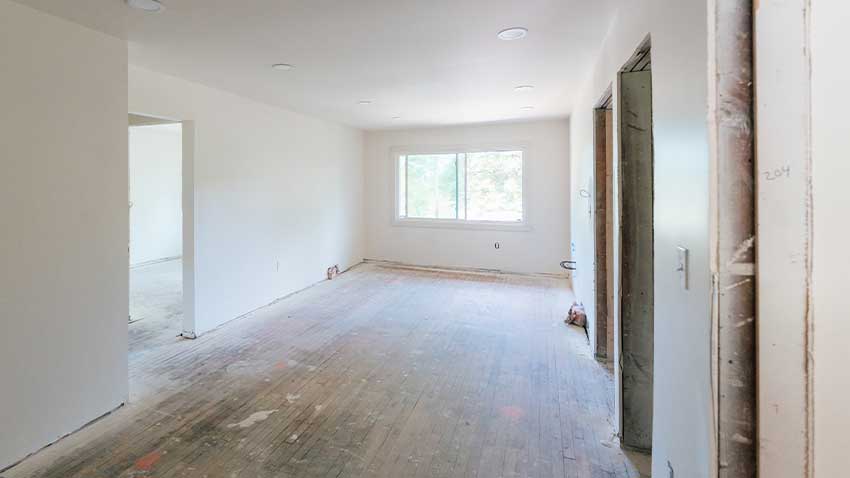
For his first major redevelopment project, Shaker set his sights on a long-vacant building near the future Joe Louis Greenway in Detroit called the Grand Oak Apartments. Leveraging his background in utilities (electricity and water), Shaker sought to rehabilitate the property for the highest energy efficiency, creating eight new housing units for residents at 60% Area Median Income. In addition to addressing the housing shortage, the measures Shaker is taking to make the units energy-efficient are helping to reduce future costs for residents.
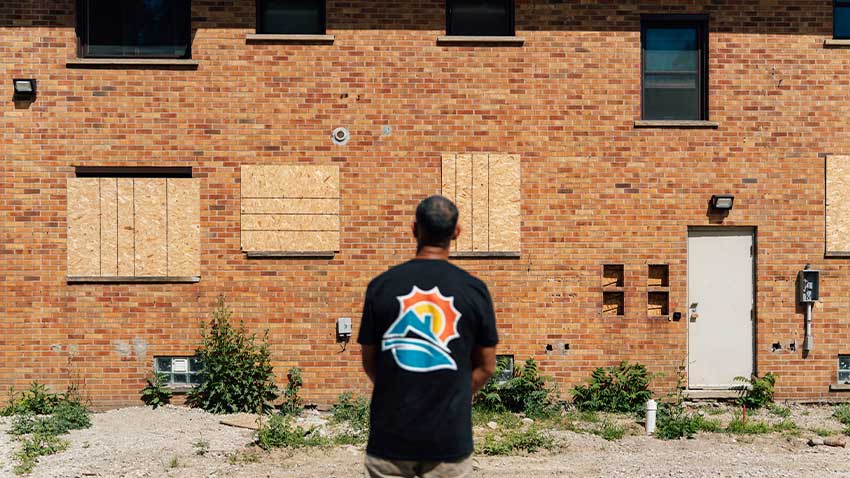
As an emerging developer, Shaker received support for the Grand Oak project from the Michigan Economic Development Corporation’s (MEDC) Build MI Community (BMC) grant initiative, a program designed to promote private investment in Michigan’s communities and projects taken on by owners and developers with limited real estate development experience. The $250,000 BMC grant, along with support from the Detroit Economic Growth Corporation and City of Detroit, helped bring the project to fruition.
As the Grand Oak development approaches completion, projected to be in early fall, Shaker is excited to create a blueprint for what’s possible in future projects – inspiring other developers to make a difference in Detroit and across the state.
Can you share the trajectory of your engineering career?
When I began my career, it was as a power engineer. Tennessee was more region-focused, serving most of Tennessee and surrounding states. They’re the only federally owned utility that generates and transmits their own power. That's how I was initially exposed to utilities.
My wife is also from Michigan, and when we wanted to start a family, we decided to move back home to be near family. At that point, I had looked at jobs across the country and found a company here called ITC Holdings, which was a spinoff of DTE. It was a fairly new company and they needed experienced engineers, so it was a great fit for me and opened new avenues for me as a young engineer. I was still studying the reliability of the electric grid, but more localized instead of a larger region like in Tennessee.
I stayed at ITC for roughly eight years before I transitioned to the Great Lakes Water Authority. I tell people all of the time that it was an easy transition, because water and electricity are just commodities flowing on a line. The line could be a power line or a pipe. I could see how water and utilities impacted individual people as well as an entire area. I stayed at the Water Authority for about two years before I was encouraged by my wife to really step out on my own.
What prompted the transition into real estate development?
I first purchased property as a way to make extra money with the goal of building a portfolio of properties. I began with a few small rentals and rehabbing single-family homes. By the time I left the Water Authority, I was still fixing and flipping, so I didn't really expect to do what I'm doing now.
I got out there and I looked for a problem, just as an engineer would, and what I could change to solve it. If you can solve a problem, you make yourself valuable. The problem I found was this: the State of Michigan released the first statewide housing report in 2022. It said 47 percent of houses in the state were built prior to 1970 and 48 percent of renters in the state are cost-burdened. This meant that renters spend about 30 percent of their income on utilities and rental expenses.
The City of Detroit also drafted their own housing plan. One of the points in this plan was that we have an abundance of abandoned properties and multifamily units in the city. The question was, how can we get those properties back online? I saw those two things and how the reports from the state and city overlapped and I created the Grand Oak project.
How did your company Eskay Holdings come to be?
Eskay Holdings is a real estate development company serving the Metro Detroit area. It was established as a Michigan limited liability company in 2016. My name is Shaker Khalil, so the company is my initials, SK. Our work consists of modernizing distressed properties through the electrification of building systems with energy efficient functionality and purposeful attention to meeting the needs of underserved communities. Our approach to development adheres to a sustainable business strategy, by positively impacting the environment, society or both, without the sacrifice of economic performance – the triple bottom line.
Eskay Holdings specializes in comprehensive renovation and restoration services for mid-sized structures throughout the city’s neighborhoods. Our focus is on breathing new life into existing buildings, complementing the larger developments in more prominent areas.
What is the importance of local and state support for projects like your Grand Oak development?
It’s easy to identify problems in an area and say, “These are the issues that we're having,” but the harder part is solving them. It's important to have a project like mine to show that I not only recognize these problems, but I am presenting my example of a solution. It might not be the only solution or the easiest solution, but here is my take at solving that problem. Hopefully others see this as an opportunity to duplicate what I'm doing or put their own spin on it to show that it is feasible and repeatable.
Both the state and the city pose these problems, but in addition, they actually provide financial support to people trying to improve them. They are putting money and fuel behind making things better. While using renewable energy sources, being energy-efficient, and building beyond minimum code are more costly upfront, these investments pay for themselves quickly over time. Without the Build MI Community grant, the SEED grant from the City of Detroit and the property tax abatement, the rehab of this project could not be approached in this way.
How has your engineering background paired with your family upbringing prepared you for this type of development?
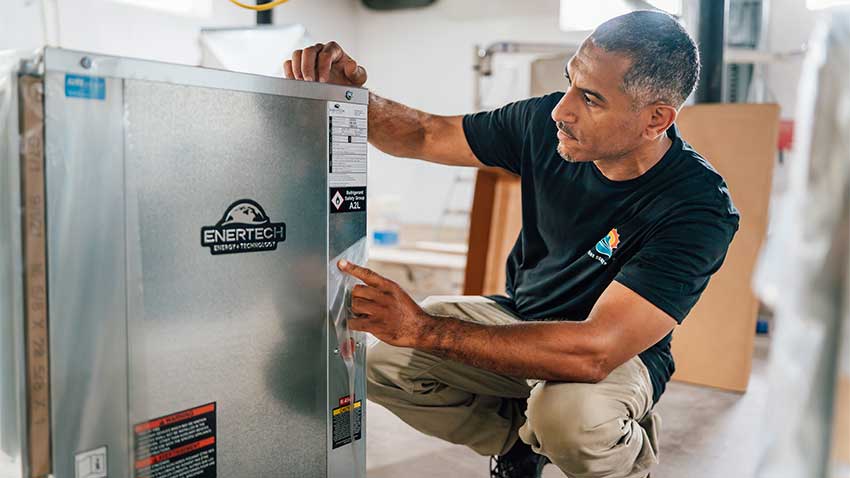
I think I have a unique combination of skills, both from my work history and my background with my family and my uncles. I can see this entire picture myself. I still need a team, but I can dream the project up, and then I can also be the one swinging the hammer.
On this first project, I have to wear all of those hats out of necessity. I am a small operation and no one else is really doing it like this. Initially people might not understand why or see the same picture I see, but once they get involved, the picture becomes clear.
What do you like most about living in Michigan?
Cities like Flint and Detroit are fast-paced places that really have all the amenities you’d want to find. I love that in Detroit, we have all four major sports teams, and the return of downtown has been great to see. We have a New York-style melting pot of people, culture and food. I also enjoy the blue collar aspect of Detroit. It's just a beautiful place to be, and I think it's a beautiful time to be here.
Learn how MEDC helps support emerging developers like Shaker