
Hitting the Right Notes
Lillian Werbin of Elderly Instruments
As the second-generation CEO and co-owner of a longstanding Lansing icon, Lillian Werbin is playing an instrumental role in preserving its legacy

The story of Elderly Instruments in Old Town Lansing is one of heritage and passion working in pure harmony. In 1972, Stan Werbin founded the shop with Sharon Burton in a modest East Lansing basement and moved the business to its Old Town Lansing location as business grew in the 1980s.
Stan’s daughter Lillian Werbin joined the Elderly Instruments team after graduating from college in 2014. She worked in sales, marketing and shipping before stepping up to guide the team as a second-generation business owner in 2017. For the past decade, Lillian has acted on her vision to usher the business into the modern age of retail while maintaining the warmth and service known in its Old Town showroom.
The Michigan Economic Development Corporation (MEDC) has also been instrumental in the ongoing growth and success of Elderly Instruments. In April 2022, the MEDC awarded Match on Main grants to 20 Michigan businesses in 19 communities including Old Town Lansing, which has been a designated Michigan Main Street (MMS) community since 2006. Elderly Instruments received a $24,300 grant toward showroom improvements to further enhance customer experience.
Even after over a half-century of service, Elderly Instruments continues to garner attention locally and nationally. The business was recognized as one of the 2024 Michigan 50 Companies to Watch by Michigan Celebrates Small Business, and in 2023, the U.S. Chamber of Commerce named Elderly Instruments as America’s Top Small Business out of over 15,000 applicants. At the awards dinner and gala, Lillian was presented with a grand prize check for $25,000.

“Being named America’s Top Small Business was both surreal and deeply affirming, she said. “It recognized not just our work as a retailer, but our long-standing commitment to community. Along with the honor came a $25,000 award, which we chose to reinvest directly into our community through new partnerships, sponsorships and donations. The most rewarding part was having a moment to pause and celebrate with the staff, customers and community who have supported us for over 50 years.”
As a second-generation business owner, Lillian hopes to continue her father’s legacy, striking a chord with local musicians and music lovers alike.
On Elderly Instruments’ debut:
Elderly Instruments started with my dad, Stan Werbin, and Sharon Burton (then McInturff). They were fresh out of grad school living in Ann Arbor and had already been collecting and trading vintage acoustic fretted instruments. Although they started by selling out of an attic, they were pretty good at it and ended up with enough inventory to open a store. Ann Arbor was saturated with music stores at the time, so they opened the original location in East Lansing. It was just the two of them at first but grew to 10 people in the first couple of years. They quickly outgrew their small space, so they moved over here to Old Town in the early 80s, and a new era began.
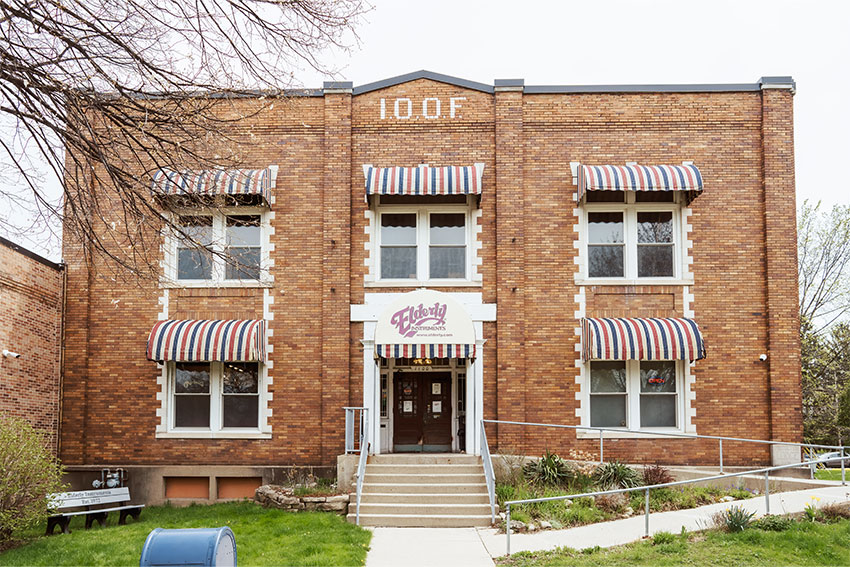
Elderly was at its largest in the 90s: we had over 100 employees and ownership changed hands solely to my father. We were bursting at the seams, so we expanded into the buildings next door. When I graduated from Western Michigan University in public relations, I didn't want to end up working for a company I didn't believe in. I asked my dad if I could come work for him at Elderly while I figured out what I wanted to do. I think it came as a surprise to him. Growing up around the business created an organic love for it, and so I started commuting from Kalamazoo to work part-time in the warehouse.
I loved it. There was so much to learn. Aside from the construction of fretted and acoustic instruments, there's a history behind these instruments that is so parallel to American history. I found a new interest in the world around me and in the politics and the socio-cultural changes that music creates, and because Elderly had been around since 1972, it had been involved in that as well.
From there, I asked to go full time and work in other departments so I could really understand how they all interacted with one another. Then I went into management: I really wanted to update the back end of the business so my dad could enjoy his last years steering the ship. He is now partially retired and still involved as a sounding board for me and our leadership team.
On being center stage as co-owner:
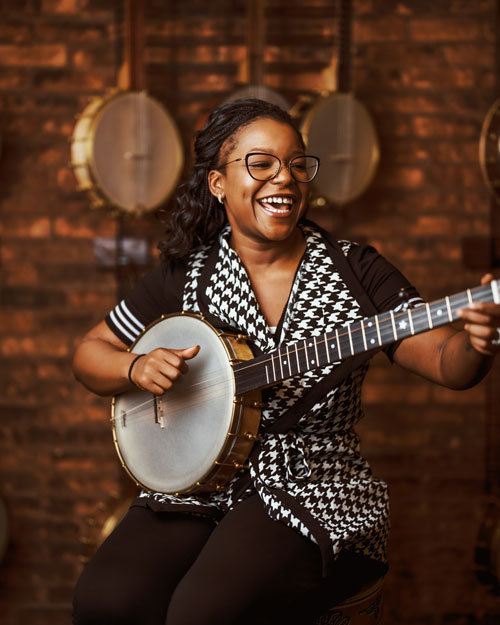 Now as a co-owner, it’s important for me to preserve what people feel when they come to Elderly. This should be a people's music store. This is a family business, and it’s a community business. Because we're focused on supporting the music community, we try to assist musicians at every stage: from picking out a starter instrument, giving the knowledge to keep it in good condition, having a repair shop to fix it and having an appraisal team for when they sell it back to us. We try to meet the needs of both the instrument and the person over their lifetimes, and that's a unique perspective.
We’re in a totally different era than when Elderly started. The world is different, but I don't intend to change the foundation of what Elderly is. I don't think you always need to change everything—sometimes you just need to savor what already exists. It’s important to be able to preserve the legacy. My dad and Sharon had a vision of creating a music store that supports musicians and gives them the best experience that they could ask for, and I don't know why I would change that.
On the impact of MEDC’s supporting act:
The Match on Main grant was incredibly beneficial in helping us improve the customer-facing side of our business. It allowed us to make meaningful improvements to the presentation of our showroom, which directly impacts how customers experience our space. Support from organizations like the MEDC can be a game-changer for small businesses that are ready to grow and evolve. Programs like Match on Main help bridge the gap between vision and reality, allowing businesses to move forward on important projects with confidence and support.
On Elderly Instruments’ legacy:
My dad was 25 when he started Elderly, and I was 24 when I started working here. I’m honored to be in a position to help continue his legacy and the legacy of American roots music. Our core mission, to serve musicians with intention and care, hasn’t changed. We continue to invest in experiences that bring people together, including concerts and workshops in our showroom. Alongside our ongoing focus on quality instruments and knowledgeable service, these efforts allow us to evolve while staying true to the values that have guided us for more than 50 years.
Learn more about how the MEDC helps businesses like Elderly Instruments make sweet music.
A portion of this story first appeared as part of the Michigan Main Street story series.