Bean to Bar
Emily Meza Wilson of Mindo Chocolate Makers
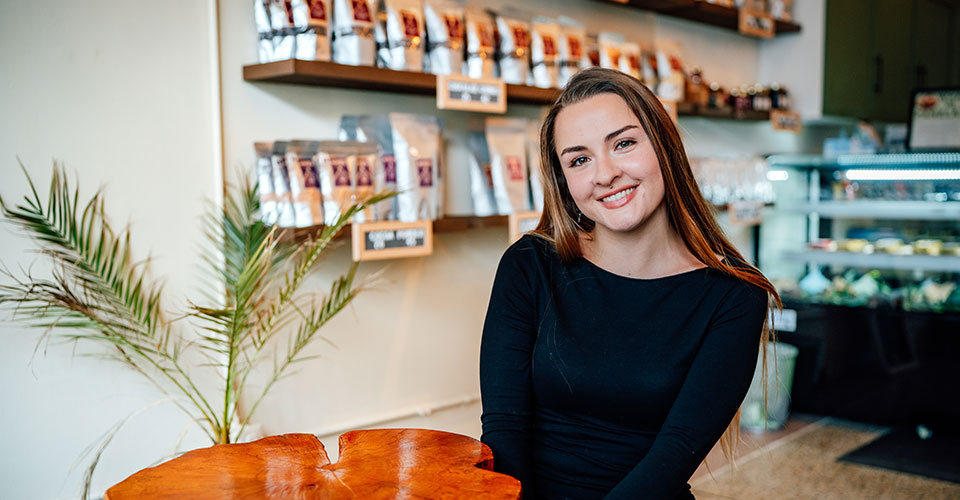
Growing up in Michigan and Ecuador, Emily Meza Wilson learned the value of high-quality cacao beans. With support and training from the Small Business Development Center, she’s now CEO of a family craft chocolate maker.
Take a bite of an award-winning bar of dark chocolate made from Heirloom Nacional cacao, part of a 5,000-year lineage native to Ecuador. How does it taste?
In a word: intense.
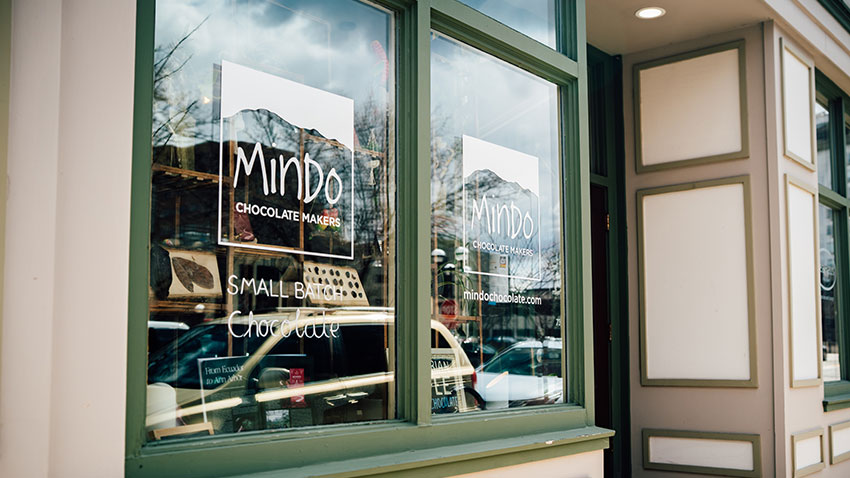
The wrapper provides a wheel of flavor notes to consider, ranging from lavender to lemon, hazelnut to molasses. The farmers and chocolatiers of Mindo Chocolate Makers bring a taste experience grown in the cloud forests of Ecuador to their storefront in Ann Arbor that can't easily be described in words. CEO Emily Meza Wilson lets the quality of the bars speak for itself.
But running an industry-leading craft chocolate maker across two continents isn’t easy. To boost her skills, Emily turned to the Michigan Small Business Development Center (SBDC), funded in part by the Michigan Economic Development Corporation. She participated in the Michigan SBDC Business Plan Training and Competition, beginning with eight weeks of bootcamp-style training alongside other incredible founders, and engaged in one-on-one coaching sessions to sharpen her strategy. After training, she entered the competition phase where her business plan earned the highest overall score, securing first place and a $3,000 award in the form of a reimbursement grant.
Now, she is the living bridge between cacao farmers in Ecuador and discerning customers in Michigan, where Mindo is earning accolades for its craft chocolate.
At the Forefront of a Movement
“I was born and raised in Michigan and graduated from the University of Michigan in biomolecular sciences. My connection to Ecuador comes from my dad; he is from Riobamba, Ecuador, and I grew up spending time in Mindo, Ecuador [a village about 20 miles northwest of the capital, Quito]. My parents founded Mindo Chocolate Makers in 2009 as a hobby in retirement, but they didn’t realize they were at the forefront of the craft chocolate movement. Over time, the demand for high-quality craft chocolate kept growing.
I was about to start my last semester of college when COVID hit, so I decided to stay in Ecuador until I finished. I started working for our family business and became increasingly involved in the cacao farming community in Ecuador, which eventually led to working full time for Mindo Chocolate Makers. Now I split my time between both places, spending 3–6 months each year in Michigan where our retail operations are based, and the rest of the year in Ecuador working directly with our farming partners and overseeing production.
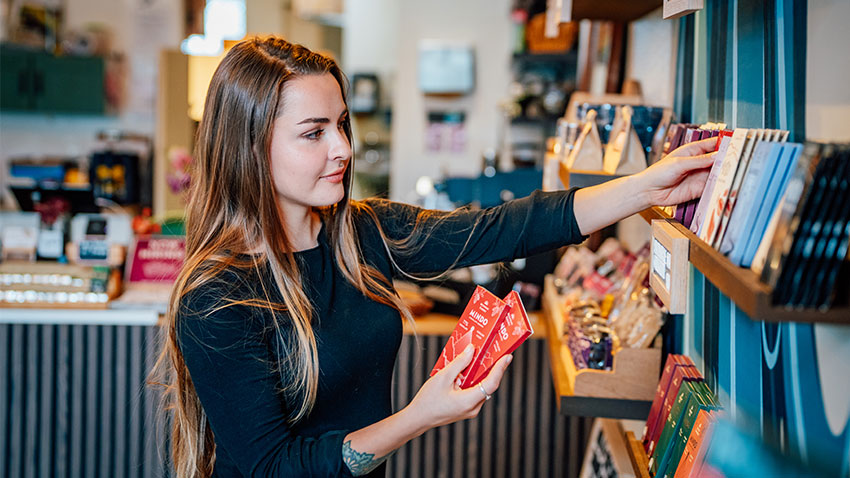
When I’m in Michigan, I’m focused on our retail operations, managing the team and growing the business. When I’m in Ecuador, I work directly with cacao farmers and oversee the chocolate-making process. We are constantly working together to improve post-harvest processes so the cacao beans can have the best flavor possible. Some of the cacao farmers have even launched their own chocolate companies after working with us!
Where the Chocolate Comes From
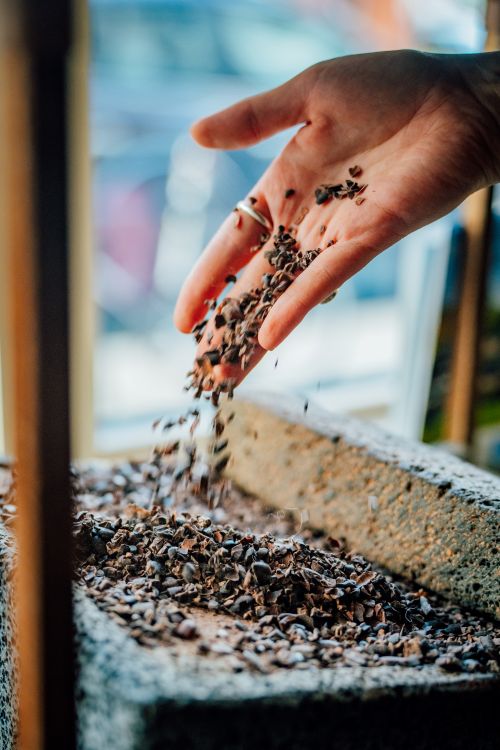
I have had the opportunity to explore not only cacao farms, but also farms producing coffee, guayusa, macadamia, sugar cane, ginger and many other crops. I’ve met farmers who still care for very old cacao trees, including pure Ancient Nacional cacao—the oldest known variety of cacao, dating back more than 5,500 years and once used ceremonially. I have seen cacao in countless shapes, colors and sizes, and for me, the most rewarding part is transforming each unique variety into a chocolate that expresses its own distinct character.
 My team and I lead educational chocolate tours both in Ecuador and in Michigan. We’ve taught over 100,000 people from all over the world, helping people understand where their chocolate comes from and supporting the farming communities behind it. We also have in-depth courses for chocolate professionals and cacao farmers.
In Michigan, we actively support local agriculture by working with Michigan-based farms and incorporating locally grown ingredients into our chocolate. Recently, we partnered with the Matthaei Botanical Gardens, where they have cacao trees, for an educational event about chocolate and cacao. Most people have never seen cacao as a fruit, so we enjoyed showing the full connection from the cacao tree to finished chocolate.
Working with the SBDC
The company has grown significantly since we started, both in terms of our product offerings and our reach. We've expanded our retail presence in Michigan and strengthened our supply chain in Ecuador. The SBDC has been instrumental in helping us navigate the challenges of scaling a business, especially one that operates across two countries. Their guidance on everything from financial assistance to strategic growth has been invaluable.
Michigan does an excellent job of fostering a supportive environment for small businesses, especially through organizations like the SBDC. There is a strong sense of community among entrepreneurs, and many valuable resources available for people starting and growing a business.
At the same time, there is an opportunity to expand support for businesses that manufacture in Michigan and contribute directly to the local economy by creating locally made products. Additional programs focused specifically on helping local factories and small manufacturers launch, grow and invest in production could make an even greater impact.
Connecting to the Land
I love the blend of small-town charm and big-city energy in Washtenaw County. Ann Arbor has this incredible entrepreneurial spirit, and there's a real appreciation for local, sustainable businesses. It's a community that values quality and authenticity, which aligns perfectly with what we're trying to do at Mindo.
Looking ahead, I want to continue growing our impact in Ecuador by expanding our agroforestry programs, supporting more farming families and producing even higher-quality chocolate. In Michigan, I would love to partner with more local farmers and incorporate Michigan-grown ingredients into our chocolate.
I also hope to continue growing our retail presence and reach more people who care about where their food comes from and the story behind it. Chocolate can be so much more than a product—it can support farmers, protect biodiversity, strengthen local economies and connect people more deeply to the land.”
Learn more about MEDC resources for sweet small businesses.