
Wednesday, September 9, 2026
Request Foods
With support from the Michigan Business Development Program, the Holland-based manufacturer expanded its operations – and its number of frozen food solutions.
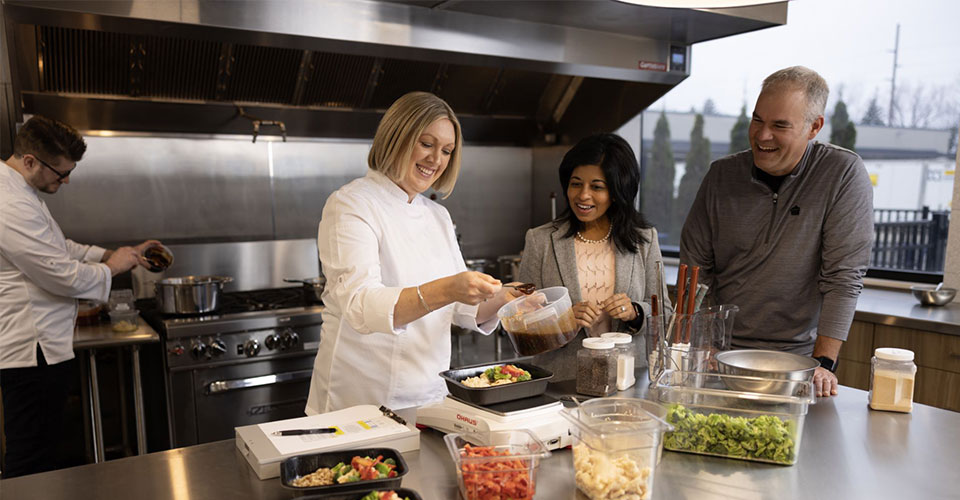
If you’ve ever heated up a frozen lasagna or skillet pasta meal for dinner, there’s a decent chance it was made in West Michigan. Request Foods, Inc. is a national leader in frozen foods, headquartered in Holland Charter Township and recognized as a Tier 1 contract manufacturer for leading national retail and wholesale brands.
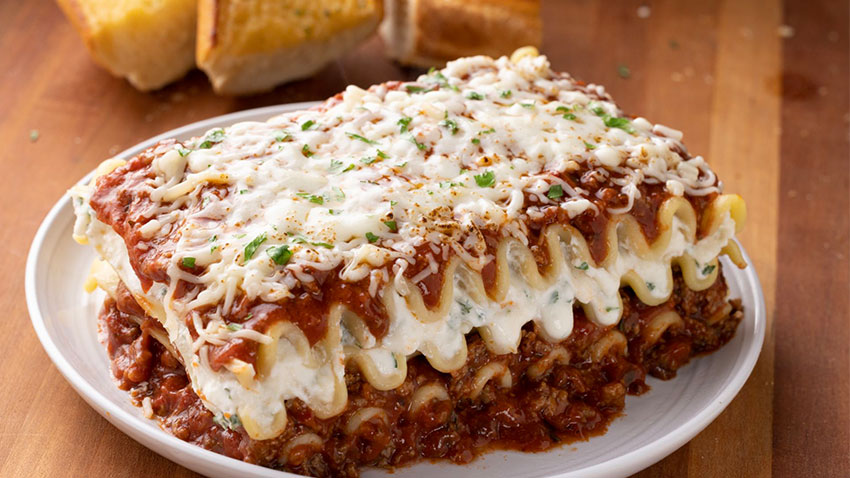
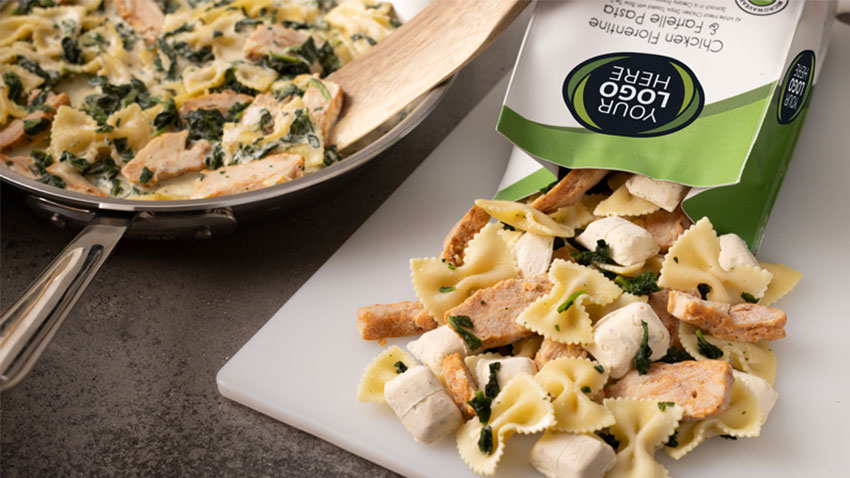
“Lasagnas are our flagship product. We make over 55 different types, and every recipe is unique to the customer,” said Request Foods Chief Financial Officer Menaka Abel. “We do a lot of pasta‑based products and phenomenal soups. Lately, we’ve seen demand move to more single‑serve meals than the larger-sized bulk meals. We’re adding more single‑serve lines and capacity to support that need.”
Founded in 1990, the company co-manufactures a variety of foods including custom entrées, side dishes, heat and serve portions and more, with in-house R&D expertise to develop high-quality, nutritious meals for its customers. As a second-generation, family-owned and operated company, its mission is grounded in faith-based Christian and family values.
Now With More Servings
In October 2021, the company announced ambitious plans to carry out four major expansions: adding manufacturing capacity at its Greenly Street location, building a cold storage warehouse on Ransom Street, constructing a Ready to Eat (RTE) plant on three parcels of property on Quincy Street and John F Donnelly Street, and expanding and upgrading its wastewater pre-treatment plant.
Executing those plans was not without its challenges. In recent years, Request Foods has faced a number of obstacles to growth, including skilled labor shortages, supply issues and diversification of its supplier base. Infrastructure limitations to wastewater discharge in the township are a major constraint on future growth. An increasingly complex regulatory and litigation environment for prepared foods has presented heightened expectations for faster, more responsive traceability and growing customer demands related to quality, indemnification and cost control.
With the challenges of contributing to a high-quality, affordable and safe food system while growing to meet new markets and demands, Request Foods was able to lean on the Michigan Economic Development Corporation (MEDC) for support, which included a performance-based grant, tax incentives, and $6.9 million in Community Development Block Grant funds to Holland Charter Township.
Some Substitutions May Be Necessary
“Our experience with the Michigan Business Development Program (MBDP) was very positive,” said Abel. “The MEDC team, especially Michelle Ball, was responsive, collaborative and easy to work with throughout the process.”
The MBDP performance-based grant, initially announced at $2 million, had a meaningful impact on both the scale and scope of the project, although both changed over the following years. Many of the company’s recent projects have centered on automation and technology upgrades that strengthen long-term competitiveness and operational efficiency, even when they do not result in significant headcount growth. In addition, the Greenly Street building was scaled back from initial plans. “As business evolved, we rethought how we would use that space more efficiently and delayed and reconfigured the spend for future expansion initiatives,” said Abel. Due to the reduced scope, only $1.58 million of the MBDP grant amount was ultimately disbursed.
The incentive package also dedicated resources to training and upskilling the company’s workforce, helping to attract and retain talent in a competitive labor market, and provided the opportunity to strengthen processes and technology for increased production demands.
Made With Locally Grown Ingredients
The MEDC’s support enabled Request Foods to carry out its expansion and diversification efforts in Michigan, with a primary focus on West Michigan. “Although we received attractive opportunities to expand outside the state, we remain committed to growing within the Holland community whenever possible,” said Abel.
Its continued presence strengthens Michigan’s food and agribusiness ecosystem by creating demand for in-state ingredients, packaging, transportation, cold storage and equipment support, helping sustain a broad network of local suppliers and service partners. “Approximately 25% of our spend for direct material comes from Michigan‑based suppliers,” said Abel. “That’s just ingredients. Most of our service providers, including construction, related trades and transportation services, are Michigan‑based vendors. A lot of that investment goes right back into the state.”
As a growing manufacturer rooted in West Michigan, it also provides continued employment growth, with a 20% increase in employment since 2021, investment in workforce development and contributions to the region’s reputation as a hub for food production and innovation. “Our presence helps keep economic activity, supplier relationships and future investment opportunities anchored in Michigan,” said Abel.
Request Foods is doing its part to spread the word about Michigan’s advantages. “We’re having discussions with one of our customers who is considering relocating out-of-state manufacturing operations to Request,” said Abel. “We’re saying, ‘Come to Michigan—we can offer a better cost, quality and value profile.’ We need the MEDC’s help to be able to offer that.”