
Success Story
CircNova
As one of 17 startups selected for a Google initiative and recipient of a state support grant, CircNova is using a proprietary AI engine to accelerate development of new therapies for ovarian cancer and other disorders using circular RNA.
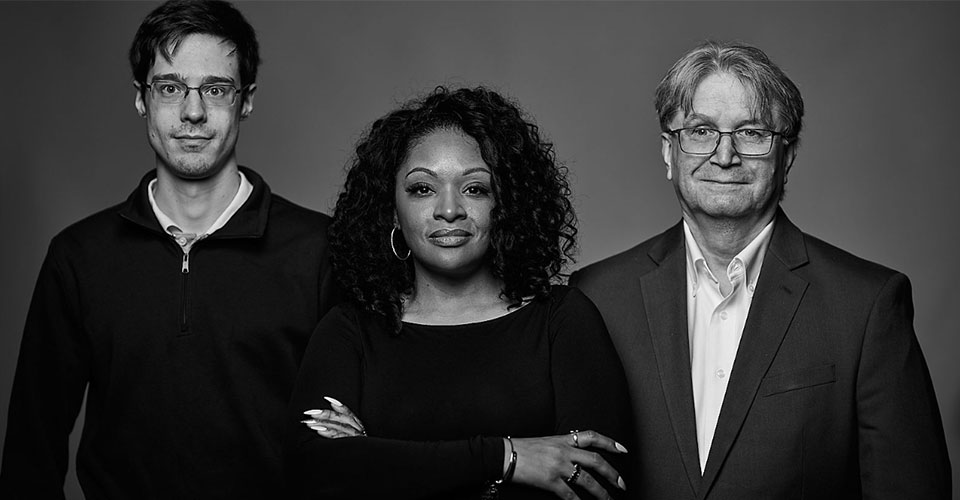
Innovations in healthcare and biotechnology are a core aspect of Michigan’s startup ecosystem. One of the companies on the cutting edge is CircNova, with headquarters in downtown Detroit at Newlab and a laboratory in Ann Arbor. In May 2024, it received an Inclusive Entrepreneurship Support Grant (IESG), a program to break down barriers for disadvantaged small businesses, entrepreneurs, and innovators in communities of color. As noted at the time, “Awarded funds support the launch of CircNova’s laboratory including research director and lab technical staff.”
 Building on the work of co-founder and chief scientific officer Joe Deangelo, CircNova made a “proprietary AI engine that allows us to identify, design, and then produce novel, non-coding, circular RNAs”, as Brown told TechCrunch. As its technology matures, CircNova was recently selected for the Google for Startups AI Academy, one of only 17 startups nationwide. In fact, four were chosen from Michigan – more than any other state. CircNova was also awarded $50,000 in the first round of the Detroit Startup Fund.
CircNova is part of a developing innovative hub of Ann Arbor-area companies using AI tools, and Brown is a University of Michigan alum. “They’re building something truly groundbreaking in biotech,” Ann Arbor SPARK Vice President Mike Flanagan said. “Not only are they developing their own therapies, but they’re creating an AI platform that other companies can use to innovate.”
Brown shared her perspective on CircNova’s aspirations, the promise of its technology for untreatable disorders, and the value she sees in Michigan.
What does CircNova do?
CircNova does AI-driven drug discovery, which accelerates therapeutic development. Essentially, we are leveraging AI to bring new treatments to market in an accelerated fashion.
We are focused on RNA therapeutics, more specifically circular RNA, which gives us access to treat more undruggable diseases. Compared to linear RNA, which can degrade at both ends, has a shorter lifespan and is not necessarily always able to stay in the cell, circular RNA is a continuous loop. It allows us to be more efficacious and precise in binding to the disease target, allowing us to treat the disease in a more full-scope way than before.
Five to ten years ago, RNA was all considered junk. We didn't think we could do anything with it, and certainly not treat disorders from within the cell. New science is taking a more advanced look at how linear RNA compares to circular. We’re partnering this science with next-level technology like artificial intelligence. Putting the two together is allowing us to design molecules that previously would have taken thousands of hours, in a fraction of the time. AI allows us to use predictive analytics to design novel circular RNAs – some coding, some non-coding.
What do you think are the most promising diseases for RNA to target, and for CircNova specifically?
For RNA in general, oncology, neural diseases, rare genetic disorders, and rare orphan diseases. For CircNova, I like to look into niche markets, the ones that we can really take hold of, get to know incredibly well, and then make sure that we are setting the benchmark for how things should be done. With CircNova, that focus is on neural diseases right now, as well as specific cancers. We're doing some work towards ovarian cancer, and towards neurofibromatosis, but looking at other neural diseases as well.
How are you using AI?
The NovaEngine is our proprietary, priority platform. It is our own native AI, our own transformer architecture. Think about the NovaEngine like OpenAI for RNA therapeutic data. You're coming to us for customizable molecule design and development. Beyond that, whether it's in documentation, data generation, or geodata sets, we are using AI at every single step of the process, from initial discovery all the way to taking a pre-IND [a meeting with the U.S. Food and Drug Administration to prepare for an Investigational New Drug (IND) application].
I was having a conversation with someone the other day, and they challenged me with, ‘Your AI engine, your proprietary native AI is going to replace scientists.’ And I said, ‘Oh my God, no, it's going to optimize those scientists. They’re that much more efficacious. They're that much more precise. That's opening up jobs for scientists to develop [therapies], not slowing us down.’
Why Michigan? What's unique about the startup ecosystem here?
Michigan is one of these unassuming states when it comes to biotech. We have amazing research universities and institutions, and have a lot of very promising biotech companies, but no one really looks to us as a leader in a certain therapeutic area. I want to change that with CircNova. I want anyone who's developing an RNA therapeutic coming to the CircNova platform to do it, with technology born and bred in Michigan.
In Michigan, we've been on the map before for automotive. We've been there with mobility. Now, becoming benchmark leaders in biotech gives us an entirely new, different way to compete with the rest of the country.
How has the IESG program helped?
The IESG program was essential to open my wet lab. I'd raised money from amazing investors and supporters here in Michigan, but biotech is expensive. I needed a bit of help for us to establish a wet lab, get in the expensive machinery, and hire more people. The grant allowed me to make the wet lab a reality. I was able to hire two scientists and a lead because of that grant. It meant job creation, and moving our wet lab and our tech forward in a way I would not have been able to without that support.
What you hope to get from the Google for Startups AI Academy?
When you're doing something as innovative as using AI for drug discovery, you want the best in the business out there supporting you, whether it's through their products, their services, or their tools.
The Google for Startups AI Academy introduces us to the best AI products, and makes sure we've got support from tech leaders like Google. As we're advancing and growing into a different type of company, we're able to do that with a program like this. Every week we're talking about the progress being made, and rather than having to talk to a sales representative, I have people who are wrapping their arms and legs around me to say, ‘What can we do to help you advance this a lot faster, in this concentrated cohort?’ It's basically like having them hold my hand, and knowing I've got one of the best tech partners in the world to help me continue to develop and optimize what we're building.

What's next for you? Where is CircNova going from here?
We are on our way to becoming the premier AI drug discovery agent for RNA therapeutic development. Whether you are a major biopharma or if you're a small startup, if you are developing an RNA therapeutic, you should be coming to CircNova. We want to be one of the first few companies in the U.S. to co-develop an RNA therapeutic. It is game-changing.
We've seen this done with Isomorphic Labs. They've done it in protein. CircNova is on track right now to be one of the first to do this in RNA, and specifically circular RNA. That allows us to establish ourselves as an early mover and a benchmark leader within the industry.
I've had investors tell me from other states, ‘You can't run this kind of biotech in Michigan.’ Yes, I can, because the talent's there. I look at the correlation between RNA, which no one thought was really that valuable, and how people looked at us as a state. We're often undervalued for what we can contribute to life sciences and biotech. I want CircNova to be the catalyst that shows not only are we a contributor, we’re an early mover – we’re a leader in this space, and we should be seen as such.